You have just finished preparing a meal, but instead of the delicious scent of home cooking, your kitchen is filled with a thick, acrid cloud that refuses to shift. I know exactly how it feels when a simple cooking mishap turns into a week-long battle with your nostrils. If you are currently wondering how to get smoke smell out of oven surfaces without filling your home with even harsher chemical fumes, you are definitely in the right place.
I understand the frustration of having your smoke alarm chirp every time you preheat the grill, or the nagging worry that your appliance might no longer be safe to use. It’s a common problem, but you don’t have to tolerate that burnt-toast aroma forever. My promise is to help you neutralise those stubborn odours and restore a fresh, clean scent to your kitchen. In this guide, I’ll walk you through a proven two-stage process. We will look at physically removing the carbonised residue and then using molecular neutralisers like white vinegar or baking soda. These staples remain incredibly cost-effective in July 2026, with a 1 lb box of baking soda often priced between $0.99 and $1.99, making them a brilliant first line of defence for any hardworking home.
Key Takeaways
- Clear the air immediately by prioritising ventilation and using extractor fans to stop airborne smoke particulates from settling in your kitchen.
- Discover how to get smoke smell out of oven cavities using a natural bicarbonate of soda paste that neutralises acrid scents over twelve hours.
- Learn why you must allow the appliance to cool fully before attempting to remove the carbonised food residue that is fueling the odour.
- Identify the hidden spots where grease typically collects, such as behind the fan or on the roof, to prevent future smoke alarms from being triggered.
- Establish a consistent cleaning routine to stop stubborn deposits from reaching their smoke point during high-heat cooking.
Immediate Actions: Neutralising the Source of the Smoke Smell
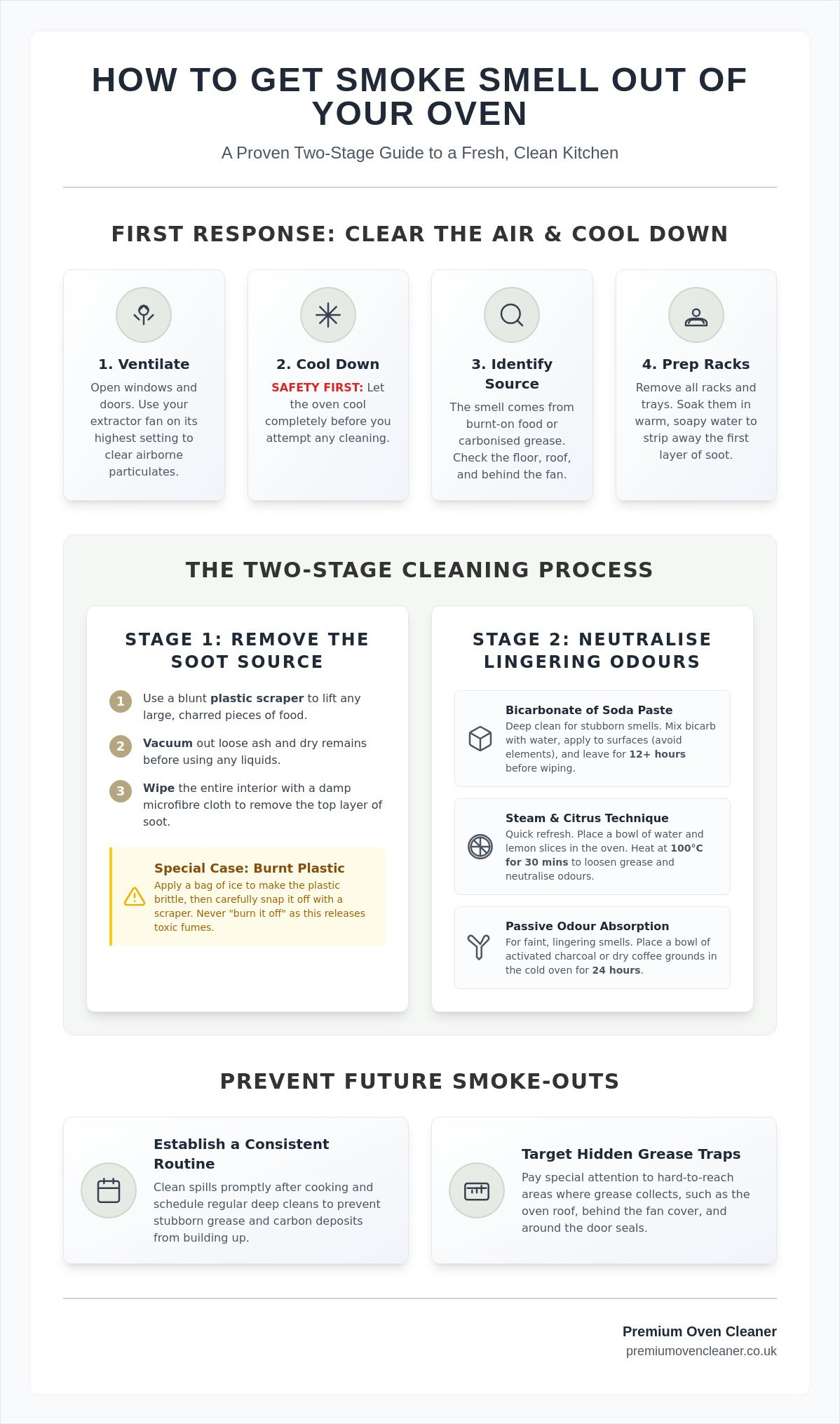
The moment you realise your kitchen is resembling a thick fog, your first priority is ventilation. Open every window and door possible to create a cross-breeze, and set your extractor fan to its highest setting. This isn’t just about comfort; it’s about stopping airborne particulates from settling into your curtains, wallpaper, and soft furnishings. Whilst the air clears, you must resist the urge to start scrubbing immediately. Let the appliance cool completely. Working on a hot oven is a safety risk and often makes liquid spills even more difficult to manage as they bake onto the surface.
I have seen many homeowners struggle with how to get smoke smell out of oven interiors because they overlook the actual cause. Usually, the culprit is carbonised grease. This happens when old fats or sugars are repeatedly heated until they reach their smoke point. Even if your oven floor looks relatively clean, the residue is often hiding on the roof or behind the fan assembly. If you use self-cleaning pyrolytic ovens, the high-heat cycle is designed to incinerate this, but a manual intervention is often faster for a one-off spill. Start by removing all racks and trays; soak them in a sink of warm, soapy water to strip away the initial layer of soot whilst you focus on the cavity.
Removing Burnt Food and Spilled Liquids
Once the oven is cold, I recommend using a blunt plastic scraper to lift any large, charred pieces. Metal tools can easily scratch the enamel, which creates more places for grease to hide in the future. I often find it’s much cleaner to vacuum out the loose ash and dry remains before you introduce any liquid cleaners. After the bulk is gone, wipe the interior with a damp microfibre cloth. This simple step removes the first layer of soot and helps you see exactly where the stubborn carbonised deposits remain.
Special Case: Removing Burnt Plastic Smell
If a plastic container or silicone mat has melted onto the base, don’t try to “burn it off” by turning the heat up. This releases toxic fumes that are far worse than a bit of burnt toast. Instead, apply a bag of ice directly to the plastic. This makes the material brittle and much easier to snap off with your scraper. Always double-check the heating elements and fan blades to ensure no tiny droplets of plastic are left behind; even a small amount will restart the smell the next time you cook.
Natural Deodorising Methods: Bicarbonate of Soda and Steam
Once you have cleared the physical debris, you are often left with a stubborn, invisible problem. The acrid scent of smoke can linger in the microscopic pores of your oven’s enamel long after the mess is gone. If you are looking for how to get smoke smell out of oven surfaces without using harsh industrial chemicals, bicarbonate of soda is your best friend. It is incredibly affordable; as of July 2026, a 1 lb box typically costs between $0.99 and $1.99, making it a staple for any budget-conscious kitchen.
I recommend mixing the powder with a small amount of water to create a thick, spreadable paste. Coat the interior walls, floor, and roof, but avoid the heating elements. You must leave this to sit for at least 12 hours, or ideally overnight. This allows the alkaline bicarb to draw out and absorb deep-seated acidic odours. Once the time is up, spritz the dried paste with white vinegar. The resulting foaming action helps lift the remaining soot. Finish with a thorough wipe-down using a clean, damp microfibre cloth to ensure no gritty residue remains. If the grease is particularly baked-on and these home methods aren’t quite reaching the corners, a specialist oven cleaning service can provide a deeper restoration.
The Steam and Citrus Technique
For a quicker refresh, steam is remarkably effective. Place a heat-proof bowl filled with water and several thick slices of lemon inside the oven. Set the temperature to a low 100°C for roughly 30 minutes. The steam softens any remaining grease whilst the natural citric acid works to neutralise the sharp smoke scent. Keep the door firmly closed throughout the process; this ensures the vapour penetrates the fan assembly and rear vents where smells often hide.
Absorbing Odours with Activated Charcoal
If a faint scent persists, you can use passive absorption. Place a bowl of activated charcoal or dry coffee grounds inside the cold oven and leave it for 24 hours. These porous materials are excellent at trapping volatile organic compounds (VOCs) that cause the smoke smell. Just ensure the appliance remains turned off whilst these materials are inside to prevent any further mishaps.
Preventing Future Smells: Deep Cleaning and Professional Maintenance
Recurring smoke smells aren’t just a nuisance; they are a sign that carbonised grease is hiding in the hard-to-reach areas of your appliance. Even if you’ve successfully learned how to get smoke smell out of oven surfaces using the methods mentioned earlier, the grease tucked behind the fan or across the roof remains a fuel source for future odours. These deposits reach their smoke point quickly during high-heat cooking, which is why your alarm might trigger even when the oven looks relatively clean.
You should also check your door seals, often called gaskets, on a regular basis. Grease frequently becomes trapped amongst the folds of the rubber. Over time, this residue smoulders and releases a persistent, burnt scent that can be difficult to shift. A quick wipe with a soapy cloth after the oven has cooled can prevent this buildup from becoming a permanent fixture in your kitchen.
The Benefit of Professional Oven Valeting
I often see the difference a professional valet makes compared to a standard domestic scrub. I take the time to dismantle the oven door and fan housing, removing the hidden grease sources that DIY efforts usually miss. For residents in Watford, Uxbridge, or Richmond, using a local specialist means your appliance is restored to a factory-fresh condition using non-caustic solutions. This avoids the toxic chemical smells associated with many supermarket cleaners and ensures a safe, odour-free result for your next meal.
Maintaining a Smoke-Free Kitchen
Prevention is always easier than a deep clean. I suggest using roasting bags or lids to contain fat splashes during high-temperature cooking. It’s also a great habit to wipe the oven floor after every use once it is safe to touch, as this stops small spills from accumulating into a thick, smoky layer. To maintain peak hygiene and performance, I recommend booking a professional oven clean every 6 to 12 months. This regular maintenance keeps your kitchen fresh and guarantees a smoke-free cooking environment for the long term.
Enjoy a Fresh, Smoke-Free Kitchen Again
Restoring your kitchen after a cooking mishap doesn’t have to be an overwhelming task. By prioritising ventilation and using natural neutralisers like bicarbonate of soda, you can effectively tackle the immediate problem. However, the most important takeaway is that recurring odours are usually a sign of hidden grease. Understanding how to get smoke smell out of oven cavities involves more than just a surface wipe; it requires removing the carbonised residue from the fan and roof that continues to smoulder during use.
If you’ve tried the DIY methods and that stubborn scent still lingers, it might be time for a more thorough approach. I provide a certified professional cleaning process that restores appliances to a high standard of hygiene, ensuring your home stays safe and fresh. Serving Ruislip, Watford, and Greater London, I am always ready to help you get your cooker back to its best. Book a professional oven deep clean to remove stubborn odours today and take the stress out of your household maintenance. You’ll be back to cooking your favourite meals without the worry of a smoky kitchen in no time at all.
Frequently Asked Questions
Is it safe to use an oven that smells like smoke?
It is generally not advisable to use an oven that still smells strongly of smoke. The odour indicates that carbonised food or grease residue remains inside, and reheating the appliance will only cause these particulates to burn further. This can affect the flavour of your food and continue to release acrid fumes into your kitchen. I always recommend identifying and removing the source of the smell before you resume your normal cooking routine.
How long does it take for the smoke smell to go away naturally?
If you rely solely on natural ventilation, a faint smoke scent can linger for several days or even weeks. This is because smoke particulates settle into the porous surfaces of your kitchen and the internal components of the appliance. To speed up the process of how to get smoke smell out of oven interiors, you need to actively neutralise the source using the bicarbonate of soda or steam methods I’ve described earlier. Passive air alone is rarely enough.
Can I use the self-cleaning cycle to get rid of a smoke smell?
You can use the self-cleaning cycle if your appliance is a pyrolytic model, but you must be extremely cautious. These cycles use intense heat to incinerate residue, which will initially create even more smoke. If there is a significant amount of grease or a large spill, the self-cleaning function could actually trigger a fire. I suggest manually removing as much debris as possible before running a high-heat cycle to ensure the process remains safe and effective.
What is the fastest way to get a burnt smell out of the house?
The fastest way to clear a burnt smell is to create immediate cross-ventilation by opening windows at opposite ends of your home. Whilst the air moves, place bowls of white vinegar or activated charcoal in the affected rooms to absorb the volatile organic compounds. I find that simmering a pot of water with lemon slices on the hob helps to mask the sharp scent whilst the ventilation is underway. This combined approach clears the air quickly.