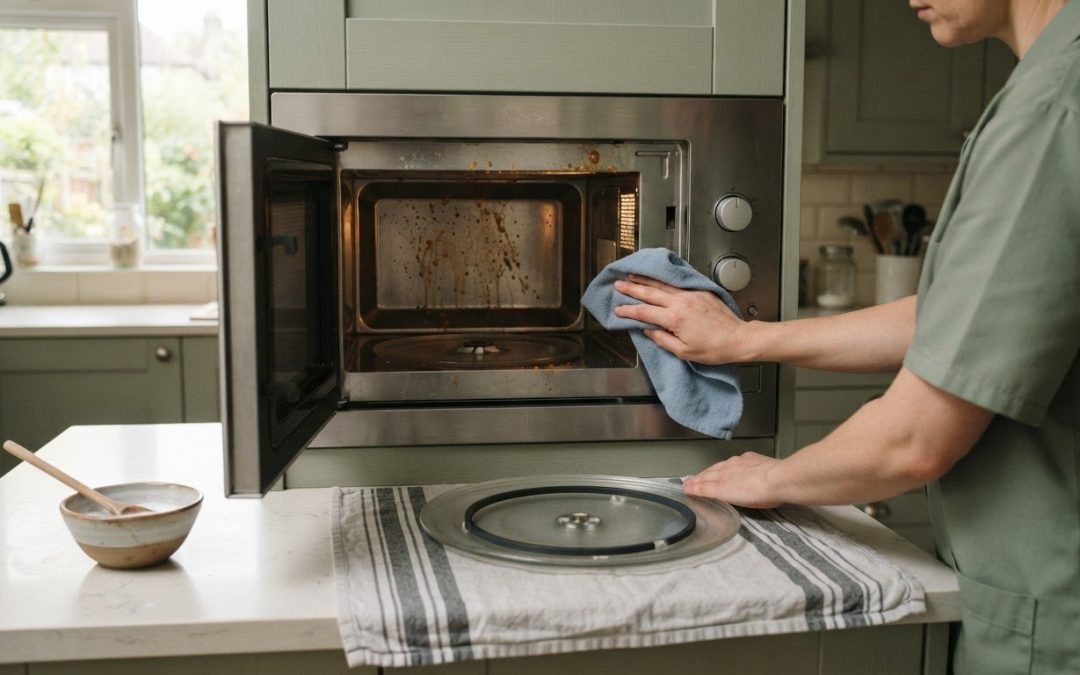
A weekly wipe keeps microwave mess from building up, while a deeper clean belongs in the routine at least once a month. If you’re deciding how to clean a microwave, loosen dried splashes with steam and wipe the interior with a soft cloth.
It’s easy to put off cleaning until a spill has dried or a food smell lingers, but regular attention makes the job easier. Use a gentle approach: wipe the exterior, door and controls carefully, without harsh scrubbing or spraying cleaner directly onto the buttons.
This guide explains how often to clean the appliance and walks through practical steps for its interior, turntable, exterior and controls. You’ll also learn how to use bicarbonate of soda and warm water to tackle lingering food odours, leaving the microwave fresh and ready for its next use.
Key Takeaways
- Clean large spills promptly so food doesn’t dry onto the microwave’s interior.
- For dried-on grime, heat vinegar and water for two or three minutes, then let the steam loosen the residue before wiping.
- Let the glass turntable cool completely before washing it to reduce the risk of it shattering.
- Try bicarbonate of soda mixed with warm water to help tackle lingering food smells.
How often should you clean your microwave?
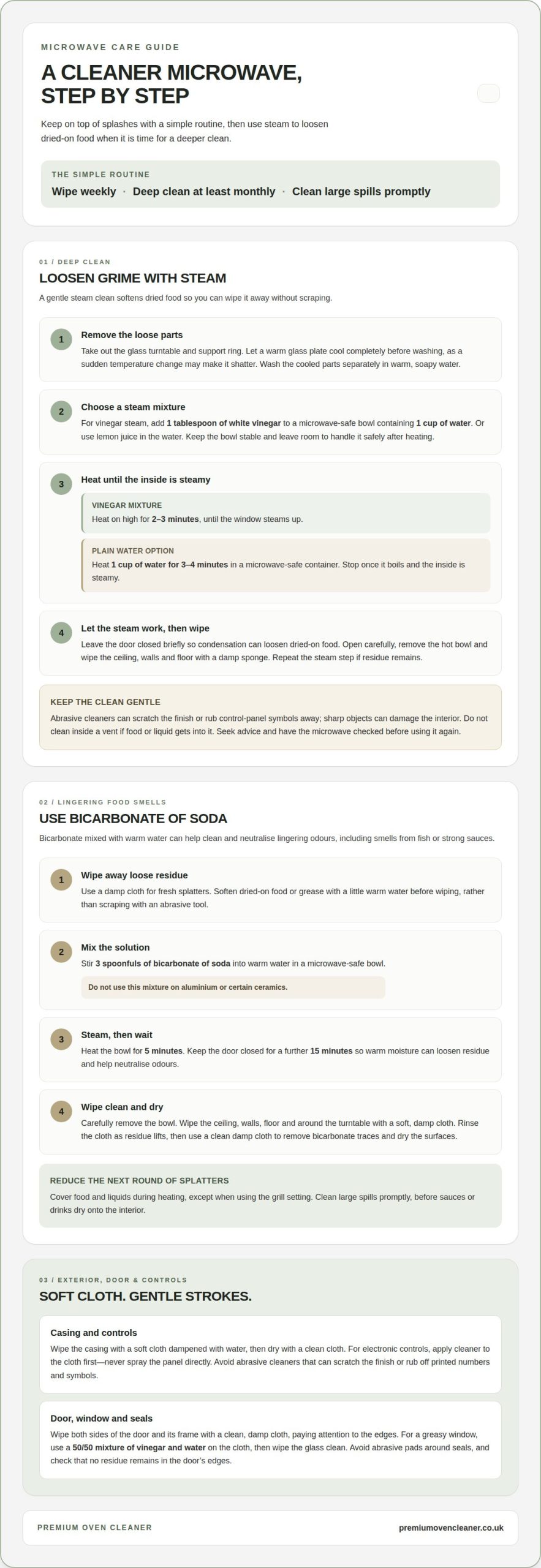
Wipe your microwave every week and give it a deeper clean at least once a month. Clean large spills promptly, before sauces or drinks dry onto the interior. A gentle cleaning method loosens residue without scratch-prone scraping.
- Remove loose parts. Take out the turntable and support ring before cleaning the interior. Let a warm glass plate cool completely before washing it, as a sudden temperature change may make it shatter. Wash cooled parts separately with warm, soapy water.
- Choose a natural steam mixture. Add one tablespoon of white vinegar to a microwave-safe bowl containing one cup of water. For a citrus alternative, use lemon juice in the water. Keep the bowl stable and leave enough room to handle it safely after heating.
- Heat the mixture to loosen food. For vinegar steam, heat the bowl on high for two or three minutes, until the window steams up. If using plain water to loosen grime, heat one cup for three to four minutes in a microwave-safe container. Stop once the mixture boils and the inside is steamy.
- Let the steam work, then wipe. Leaving the door closed briefly after heating lets condensation help loosen dried-on food. This gives you a simple way to learn how to clean a microwave with steam. Open carefully, remove the hot bowl, then wipe the ceiling, walls and floor with a damp sponge. Repeat the steam step if residue remains.
- Avoid harsh tools and liquids near vents. Abrasive cleaners can scratch the finish and rub control-panel symbols away; sharp objects can damage the interior. If food or liquid gets into a vent, avoid cleaning inside the opening and seek advice before using the microwave again. Stop cleaning around the opening and have the microwave checked before using it again.
Cleaning the exterior, door, window and controls
Wipe the inside ceiling gently with a soft, damp cloth, taking care not to press into the vents. If food or liquid has entered a vent, don’t push in a cloth or cleaner; arrange a professional assessment.
Wipe the exterior and controls
Wipe the casing with a soft cloth dampened with water, then dry it with a clean cloth. Move the appliance only if you can do so safely, and don’t drag it across the countertop. For electronic controls, apply cleaner to the cloth first, never spray the panel directly. Avoid abrasive cleaners, which can scratch the finish or rub off printed numbers and symbols. If using a non-scratch scourer on a stubborn mark, wet it first and test it on an inconspicuous spot.
Clean the door, window and seals
Wipe both sides of the door and the surrounding frame with a clean, damp cloth. Pay attention to the edges, where splashes can collect, and use a fresh part of the cloth rather than leaving grease to spread. For a greasy window, use a 50/50 mixture of vinegar and water on your cloth, then wipe the glass clean. Avoid abrasive pads around the seals; use gentle strokes and check that no residue remains in the door’s edges.
Finish by drying the door, frame and casing, then return the microwave to its usual position. For stubborn build-up across the appliance, a professional microwave clean can take the task further.
Neutralising food smells with bicarbonate
Yes. Use washing-up liquid on a damp cloth to remove food residue, or mix bicarbonate of soda with warm water to clean and neutralise lingering smells. Avoid bicarbonate on aluminium and certain ceramics.
- Remove loose residue first. Wipe fresh splatters from the microwave with a damp cloth. For dried-on food or grease, soften the deposit with a little warm water before wiping, rather than scraping with an abrasive tool. This helps lift residue without grinding it into the surface.
- Mix the bicarbonate solution. Stir three spoonfuls of bicarbonate of soda into warm water in a microwave-safe bowl. This natural household method can help tackle smells left by foods such as fish or strong sauces. Don’t use the mixture on aluminium or certain ceramics.
- Steam the microwave. Heat the bowl for five minutes to fill the interior with steam. Keep the door closed for a further 15 minutes, allowing the warm moisture to loosen food residue and help neutralise odours.
- Wipe the inside clean. Carefully remove the bowl, then use a soft, damp cloth to wipe the ceiling, walls and floor. Work over greasy patches and around the turntable, rinsing the cloth as residue lifts. Use a clean damp cloth afterwards to remove any bicarbonate traces, then dry the surfaces.
- Prevent the next round of splatters. Cover food and liquids during heating, except when using the grill setting. A suitable cover helps keep sauces contained and reduces the grease and food residue left to clean in your kitchen.
For help with stubborn build-up, book a professional microwave clean.
Premium Oven Cleaner: Oven Cleaning
Premium Oven Cleaner provides microwave cleaning for readers who want professional help beyond their regular household routine. If baked-on residue keeps returning or you’d rather leave a detailed appliance clean to a specialist, this is a practical next step for households in areas such as Ruislip, Harrow and Watford.
The team also cleans ovens, so you can arrange care for these two frequently used kitchen appliances together. A professional clean may suit you when routine wiping hasn’t dealt with build-up or you want your microwave included in a broader cooking-appliance clean. For lighter splashes, the steps above remain useful between cleans.
To discuss a microwave or oven clean, visit Premium Oven Cleaner.
Make a simple care routine stick
A clean microwave is easier to maintain when small habits become part of your kitchen routine. After cooking, notice fresh splashes before they dry, and leave the door open briefly if moisture or a strong food smell lingers. These quick checks help you spot marks early, rather than facing a bigger cleaning job later.
Knowing how to clean a microwave also means recognising when a detailed clean would be more useful than another quick wipe. Persistent build-up can make routine kitchen tasks feel harder, so set aside time in your household schedule to give the appliance proper attention.
Choose the approach that suits your home and keep the appliance ready for everyday use. Contact Premium Oven Cleaner to discuss a clean, and take the next step towards a fresher kitchen.
Frequently Asked Questions
What is the easiest way to clean a microwave step by step?
For a straightforward clean, remove the turntable and support, loosen stuck food with steam, then wipe the inside and outside with a soft cloth. Wash the removable parts separately and dry them before replacing them. Finish by checking the door edges and the area beneath the turntable, where crumbs and small spills can collect.
How do you clean a microwave with lemon and water?
Squeeze lemon juice into a microwave-safe jug of water and heat it on full power for two to three minutes, or until the water boils and the interior steams. Leave the jug inside for five minutes so condensation can loosen grime. Carefully remove the hot jug, then wipe away the softened residue with a cloth.
How do you clean a microwave with vinegar and water?
Stir a tablespoon of white vinegar into a microwave-safe bowl containing one cup of water. Heat it on high for two or three minutes, until the mixture boils and the window steams. Let the steam loosen marks, then carefully remove the bowl and wipe the surfaces. Keep vinegar off porous stone or ceramic worktops.
How do you remove burnt-on food and grease from a microwave?
Soften stubborn deposits with steam before wiping, rather than trying to chip them off. Repeat the steaming process if needed, then use a damp cloth with gentle pressure. Don’t scrape burnt food with a knife or another sharp object, as it can damage the microwave’s inner surface. Wipe away any loosened grease afterwards.
How do you clean the microwave turntable and its support?
Wait until the glass turntable has cooled completely, then wash it and its support with warm, soapy water. A particularly dirty support can soak in hot, soapy water for 15 minutes before wiping. Only put the turntable in a dishwasher if the microwave manual says it’s dishwasher-safe. Dry both parts before refitting them.