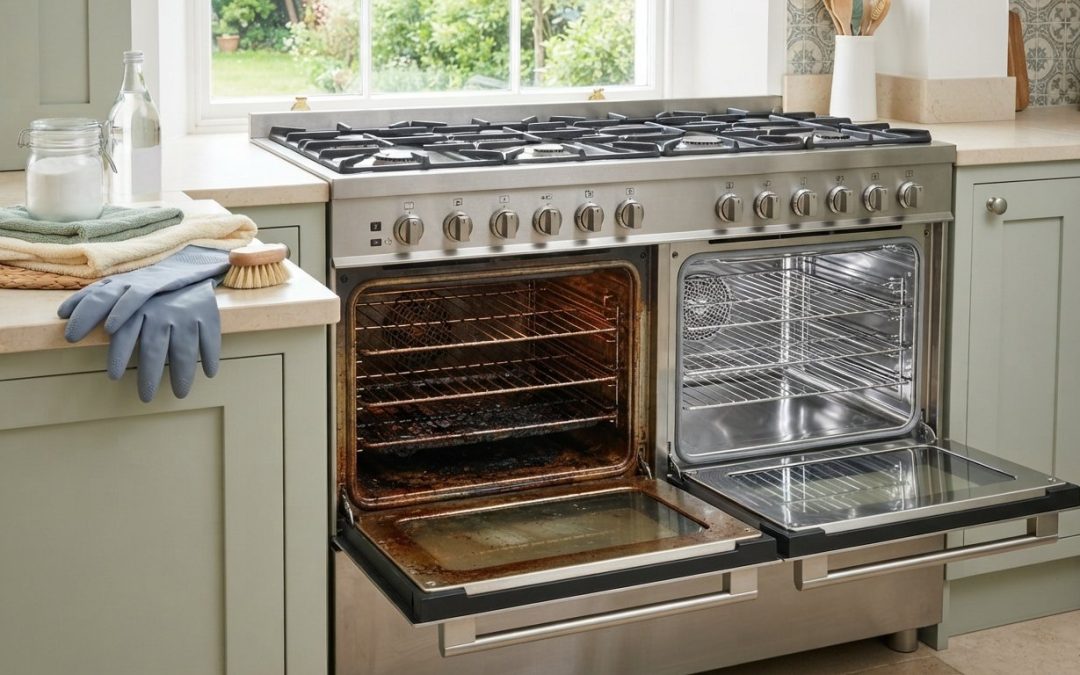
Have you noticed your kitchen filling with a faint haze of smoke every time you preheat the oven? It’s a common frustration for many British homeowners who are wondering how to clean a greasy oven without spending all day on their knees. I know how soul-destroying it feels to spend hours scrubbing only to find that baked-on carbon won’t budge. It’s exhausting work, and the fear of damaging delicate heating elements often makes the task feel overwhelming.
This guide will show you the most effective methods to restore your appliance to its original condition. I’ll share the best ways to remove stubborn grease deposits safely and efficiently. You’ll learn how to tackle everything from cloudy glass to charred racks, whilst discovering when it’s best to call in a professional specialist for a deep restoration.
Key Takeaways
- Understand the hidden dangers of carbonised grease, which goes beyond simple mess to become a genuine fire hazard in your kitchen.
- Master the most effective techniques on how to clean a greasy oven using eco-friendly household staples like bicarbonate of soda.
- Discover why cleaning hard-to-reach areas like the oven roof and behind the fan is essential for stopping acrid smoke and smells.
- Learn when to swap ‘elbow grease’ for a specialist service to safely restore luxury range cookers and AGAs to their original condition.
Why Grease is Your Oven’s Worst Enemy (Beyond the Mess)
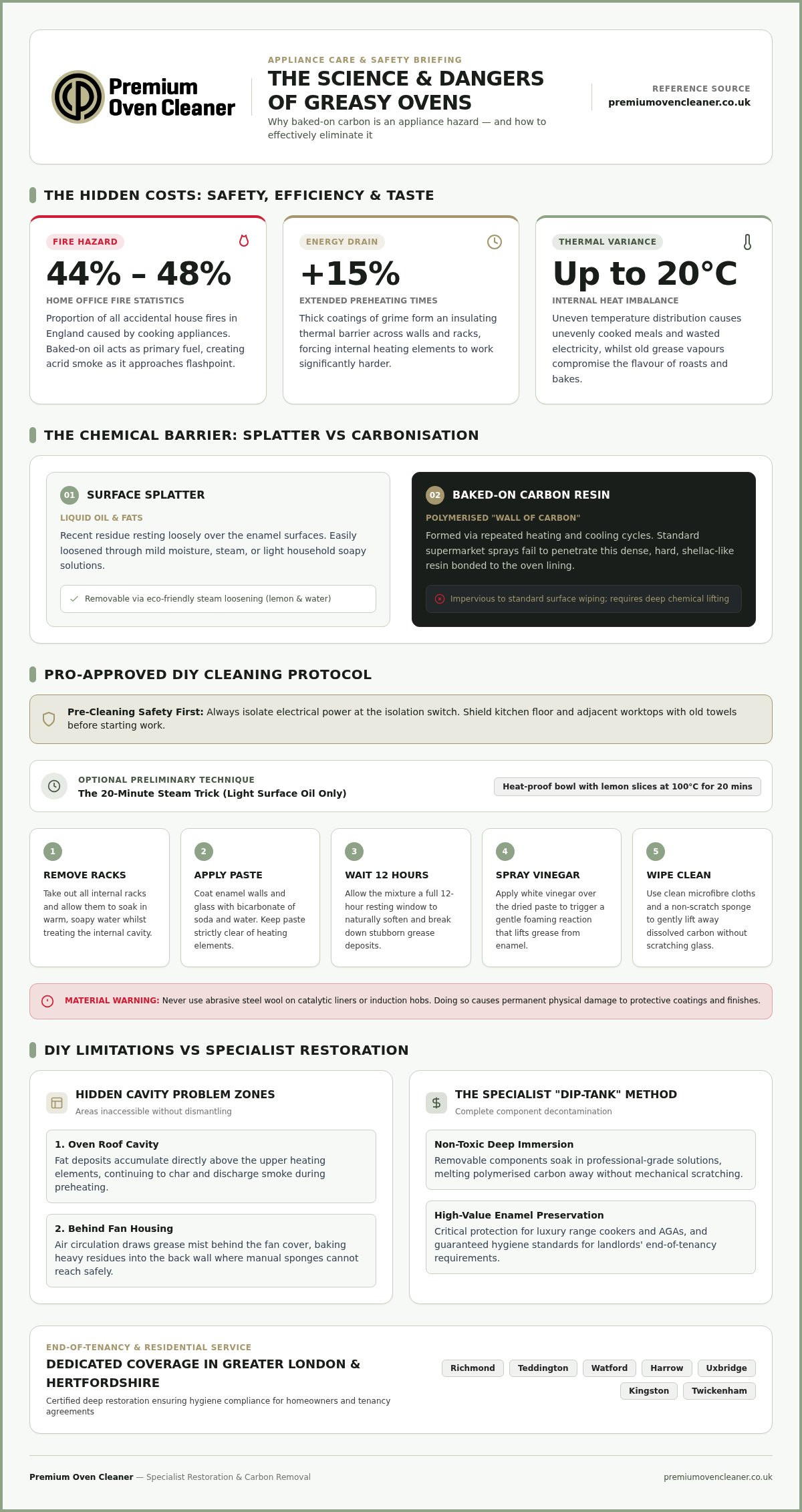
Most people searching for how to clean a greasy oven focus on the sticky brown stains on the door glass. However, the real danger lies in what happens when those fats are left to bake. Home Office Fire Statistics show that cooking appliances cause between 44% and 48% of all accidental house fires in England. Baked-on oil acts as a primary fuel source. When you see acrid smoke, it’s a sign that these deposits are reaching their flashpoint. The same grease and fire hazards apply across workplace tea points and business premises, where commercial specialists such as That’s Cleaning help organisations maintain safe, compliant cooking facilities.
There is also a hidden cost to your energy bills. Whilst a clean oven heats evenly, a thick coating of grime creates a thermal barrier on the walls and racks. This forces the heating elements to work much harder, often increasing preheating times by up to 15%. These deposits can create temperature variances of up to 20°C, leading to unevenly cooked meals and wasted electricity. Your Sunday roast shouldn’t taste like last month’s bacon, but old grease vapours will quickly ruin the delicate flavour of your favourite bakes.
The Difference Between Surface Splatter and Baked-on Carbon
Carbonisation is the chemical transformation of liquid fats into a hard, shellac-like carbon resin through the process of repeated heating and cooling. Once this shell has formed, standard supermarket sprays fail because they cannot penetrate the dense “wall of carbon” that has set against the enamel. I’ve seen many homeowners scrub until their arms ache, only to find the surface remains pebbled and black. Learning how to clean a greasy oven involves recognising that this isn’t just stubborn dirt; it’s a polymerised layer that requires specialist lifting to remove without damaging the appliance underneath. While industrial sites and commercial food operations turn to specialist contractors like Distribution Hygiene Services Limited to tackle large-scale carbon and grease deposits, domestic cookers require an equally tailored, methodical approach.
Best Way to Clean a Greasy Oven: A Pro-Approved Guide
Before you start, safety is my first priority. I always recommend turning off the power at the isolation switch. Protect your kitchen floor and worktops with old towels to catch any dirty residue. If you only have light surface oil, try the steam trick first. Place a heat-proof bowl of water with lemon slices inside at 100°C for 20 minutes. This helps loosen the grime before you start scrubbing.
For tougher stains, an eco-friendly approach is often the most effective. Knowing how to clean a greasy oven using pantry staples avoids harsh chemical fumes in your kitchen. I’ve found that a simple paste of bicarbonate of soda and water works wonders on standard enamel. To restore clarity to the door glass, use this same paste and a non-scratch sponge, being careful not to apply too much pressure to the tempered surface.
Step-by-Step: Tackling Moderate Grease at Home
- Remove the racks: Soak them in warm, soapy water whilst you work on the interior.
- Apply the paste: Coat the oven walls, but keep it away from the heating elements.
- Wait 12 hours: This allows the mixture to break down the grease effectively.
- Spray with vinegar: Use white vinegar to cause a gentle foaming reaction.
- Wipe clean: Use microfibre cloths to remove the residue.
Never use abrasive steel wool on catalytic liners or induction hobs, as it will ruin the finish. I’ve seen many appliances damaged by over-enthusiastic scrubbing. If these DIY steps feel like too much hard work, I offer a specialist oven cleaning service that restores your appliance to its original condition without the stress of manual labour.
Recognising When DIY Hacks Aren’t Enough for Your Kitchen
While many guides on how to clean a greasy oven focus on the door glass, the most problematic areas are often hidden. The roof of the oven and the cavity behind the fan housing collect heavy fat deposits over time. These spots are nearly impossible to reach safely without dismantling parts of the unit. I’ve seen how these untouched deposits continue to char, producing acrid smoke and smells that ruin the taste of a Sunday roast.
Professional restoration goes far beyond what a standard kitchen sponge can achieve. I use a specialist “dip-tank” method, where all removable components soak in non-toxic, professional-grade solutions. This process melts away polymerised carbon without scratching delicate surfaces. For homeowners with luxury AGAs or complex range cookers in Richmond or Teddington, this specialist handling is essential. It protects the integrity of the enamel whilst ensuring a level of hygiene that simple scrubbing cannot match.
Finding a Local Specialist in Greater London and Hertfordshire
I offer dedicated local expertise to homeowners in Watford, Harrow, and Uxbridge, ensuring every appliance looks and performs like new. For landlords in Kingston or Twickenham, a certified professional clean is the most reliable way to handle end-of-tenancy restorations. It ensures the kitchen meets strict hygiene standards before new tenants move in. If you are tired of wondering how to clean a greasy oven yourself, you can Book a professional oven restoration with Premium Oven Cleaner to handle the hard work for you.
Enjoy a Smoke-Free Kitchen and Better Tasting Roasts
Understanding how to clean a greasy oven is about more than just aesthetics; it’s about fire safety and protecting your appliance’s efficiency. While simple household hacks help with light maintenance, they can’t penetrate the thick carbon deposits that build up in hidden areas like the oven roof or behind the fan housing. These stubborn residues are what cause acrid smoke and ruin the flavour of your cooking.
I provide a certified restoration service using environmentally friendly, non-toxic cleaning solutions that are completely safe for your family. I specialise in deep-cleaning everything from standard hobs to luxury AGAs and range cookers across Greater London, Watford, and Richmond. Restore your oven to its original glory-Contact Premium Oven Cleaner today. You don’t have to face the grime alone. Let me take the hard work off your hands so you can enjoy a fresh start in your kitchen.
Frequently Asked Questions
Is it safe to use a self-cleaning oven setting if there is a lot of grease?
It is not safe to use the pyrolytic self-cleaning setting if your oven has a heavy build-up of fats or oils. These cycles heat the interior to roughly 500°C, which can cause thick grease deposits to ignite and start a kitchen fire. I always advise my clients in Watford and Harrow to manually remove large spills before running a high-heat cycle to prevent dangerous flare-ups.
How do I clean a greasy oven rack without scrubbing for hours?
The best way to clean racks without the hard work is to soak them in a large container of warm, soapy water for several hours. This softens the carbonised layers so they can be wiped away with a non-scratch sponge. For a deeper restoration, my professional service in Richmond and Teddington uses a heated dip tank to melt away grime that domestic soaking simply won’t touch.
Why does my oven still smoke after I have cleaned it?
Ovens usually smoke after cleaning because of leftover product residue or grease trapped in hidden areas. If you’ve been researching how to clean a greasy oven and missed the roof or the cavity behind the fan, those deposits will continue to burn at high temperatures. I often find that carbon hidden behind the fan housing is the main cause of acrid smells in homes across Twickenham.
Can I use baking soda and vinegar on a gas hob or AGA?
You can use a bicarbonate of soda paste on most enamel surfaces, but you must avoid aluminium components and porous AGA plates. Vinegar is great for neutralising the paste, but it shouldn’t enter the gas burner ports. For luxury appliances in Kingston and Ruislip, I recommend using pH-neutral, specialist solutions to ensure you don’t dull the finish or cause permanent damage to the expensive enamel.