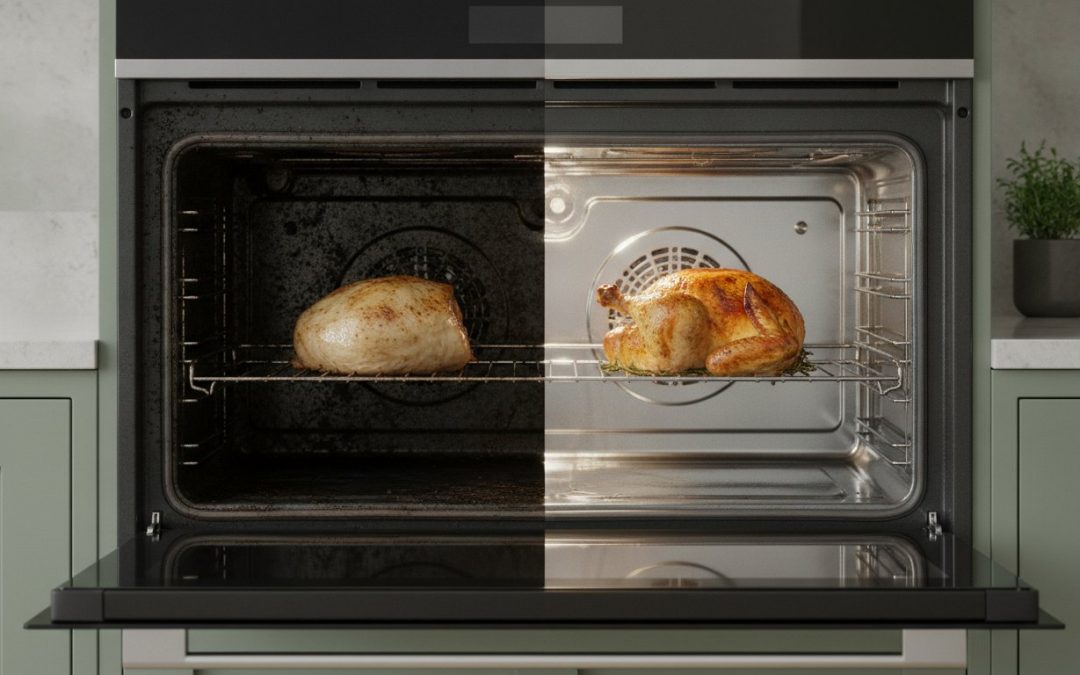
Did you know that a dirty oven can use up to 10% more energy than a clean one, according to the Energy Saving Trust? I know how frustrating it is to watch your energy bills climb whilst your Sunday roast takes longer and longer to reach the table. When your appliance is struggling with layers of carbon and grease, it’s easy to feel like you’re fighting a losing battle against rising costs and unevenly cooked food. You’re likely asking, does a clean oven save energy? The answer is a resounding yes.
I want to help you discover how a professional deep clean can lower your energy bills and improve your oven’s performance whilst extending its lifespan. I’ve seen first-hand how a bit of hard work and the right expertise can transform a sluggish appliance into an efficient powerhouse that cooks your favourite meals perfectly. We will explore the surprising science of heat absorption and explain why a sparkling glass door is your best tool for keeping heat exactly where it belongs, helping you avoid expensive repairs and regain control over your monthly household expenses.
Key Takeaways
- Learn how carbon and grease on your oven walls absorb heat instead of reflecting it, forcing the heating elements to work much harder.
- Discover why grime on the thermostat sensor causes inaccurate readings and leads to constant, unnecessary heating cycles.
- Understand the thermodynamic reasons why a clean oven saves energy by ensuring radiant heat is directed at your food rather than the burnt-on residue.
- Spot the signs of efficiency leaks, from unusual smart meter spikes to a dirty glass door that forces you to open the oven and lose heat.
- See why professional valeting is a more energy-efficient alternative to the high electricity consumption of a 480°C self-cleaning cycle.
The Science of Heat: Why Carbon Deposits Increase Your Energy Bills
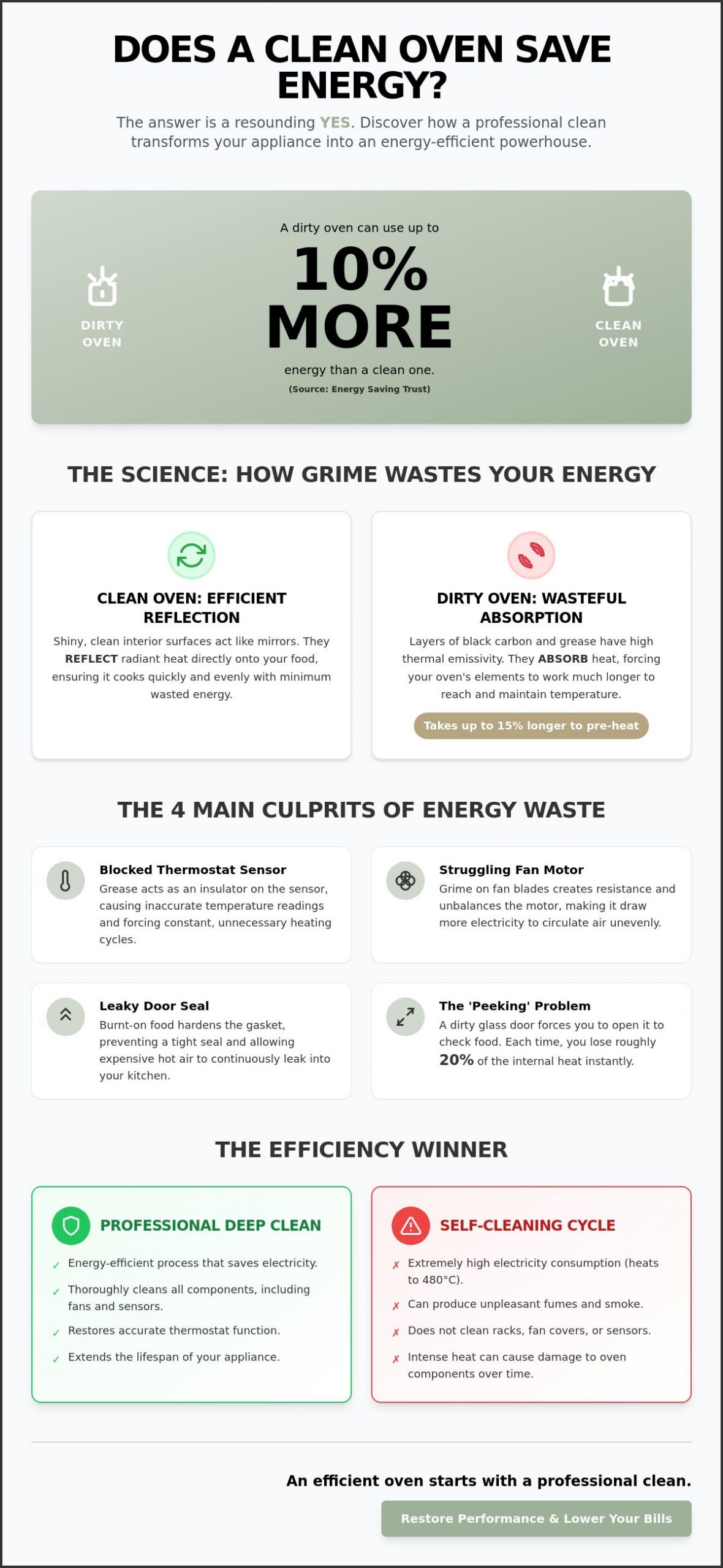
I often see ovens where the interior walls are completely hidden by a thick layer of black, burnt-on carbon. It might just look like a bit of mess, but it’s actually changing how your appliance functions. A clean oven interior acts like a mirror, reflecting heat back onto your roast or cakes. When those surfaces are coated in grime, they absorb that radiant heat instead. This forces your heating elements to stay on longer to reach the desired temperature. The science of cooking efficiency shows us that any barrier to heat transfer leads to wasted energy.
Many homeowners ask me, does a clean oven save energy, and the answer lies in how these deposits interfere with the appliance’s design. Thermal emissivity is the measure of a surface’s ability to emit or absorb infrared energy; in this context, dark carbon deposits have high emissivity, meaning they soak up heat that should be cooking your food, directly increasing your kilowatt-hour consumption.
I’ve noticed that a heavily soiled oven can take up to 15% longer to reach a standard 200°C. That is ten or fifteen minutes of wasted electricity before you’ve even started cooking. This wastes money. Additionally, grease often builds up on the thermostat sensor, acting as a layer of insulation. This makes the oven “think” it hasn’t reached the right temperature yet, leading to constant, unnecessary heating cycles that drive up your bills.
The Hidden Strain on Fan-Assisted Ovens
Most of the homes I visit in the UK use fan-assisted ovens. It’s a great technology. However, it’s vulnerable to sticky grease. When grime builds up on the fan blades, it creates air resistance and unbalances the motor. This forces the motor to draw more electricity just to keep spinning. Restricted airflow also means the heat isn’t distributed evenly, so your meals take longer to cook through, adding even more to your monthly energy spend.
Convection and Door Seal Integrity
I always check the door seals during a deep clean because they’re a common source of energy loss. Burnt-on food and grease can harden on the rubber gasket, preventing a tight seal. This allows hot air to leak out into your kitchen continuously. It’s a silent drain on your finances. This also leads to the problem of “peeking.” If you can’t see through the greasy glass, you’re forced to open the door to check your food. Every time you do that, you lose roughly 20% of the internal heat instantly. When clients ask me does a clean oven save energy, I point to that greasy glass as the first place they are losing money.
Identifying Efficiency Leaks: Signs Your Oven is Wasting Electricity
If you have a smart meter installed, you have a front-row seat to your appliance’s performance. I recommend keeping an eye on the display next time you’re roasting a chicken or baking a tray of potatoes. If you notice unusual spikes in consumption just to maintain a steady temperature, your oven is likely struggling against a heavy build-up of residue. It is one of the clearest ways to answer the question, does a clean oven save energy, because the real-time data rarely lies.
Managing these spikes is easier when you have the right energy deal in place; for business owners, greencompare.co.uk offers a way to compare commercial utility procurement and find more cost-effective contracts.
Visual cues are just as telling. If the glass door is so brown you can’t see the roast, or if you notice a wisp of smoke during pre-heating, you are effectively burning money. That smoke is energy being used to carbonise old spills rather than heat your dinner. For those living in hard water areas like Watford or Richmond, I also suggest checking for limescale. If you have a steam oven, mineral deposits on the heating elements act as a thick jumper; this forces the machine to use more power to get through the crust. Following basic energy-saving kitchen tips starts with keeping these vital surfaces clear.
Try the ‘Uneven Bake’ test. If your biscuits are burnt on one side but doughy on the other, your oven is fighting against cold spots caused by grease-clogged vents. The appliance has to work significantly harder to circulate air. This leads to longer run times and higher bills. It’s a sign that your oven’s internal environment is no longer efficient.
The Thermostat Myth
It is a mistake to trust your temperature dial implicitly. When the internal sensor is buried under a layer of baked-on fat, it cannot read the air temperature correctly. It often signals the heating element to stay on far longer than necessary. A professional oven cleaning service doesn’t just remove the muck; it clears the way for your thermostat to function accurately again. This ensures you only pay for the heat you actually use.
Smell and Smoke: The Cost of Carbonisation
That acrid smell isn’t just a nuisance; it’s the scent of inefficiency. In compact or open-plan London flats, this smoke can quickly become a health concern, but from a financial perspective, it represents pure waste. You are paying for electricity to incinerate old carbon. By removing these deposits, you ensure every penny on your bill goes toward cooking your food rather than burning off last month’s spills.
Professional Deep Cleaning vs Self-Cleaning Cycles: The Efficiency Winner
Many modern appliances feature a “pyrolytic” self-cleaning setting. While it sounds convenient, the 8 kWh reality of these cycles is often a shock to homeowners. To burn off carbon, the oven must reach temperatures of 480°C. This is an incredible amount of electricity for a single task. I’ve also found that these extreme heats can put immense strain on the internal components, sometimes leading to blown elements or damaged control boards. If you’re asking, does a clean oven save energy, the answer is yes, but the method you choose matters for your overall return on investment.
Professional valeting is the energy-neutral alternative for your household. I use specialised heated tanks in my vehicle to do the heavy lifting. This means your oven’s heating elements aren’t running for hours on end at maximum capacity. For my clients in Harrow, Uxbridge, and Kingston, this approach offers the best of both worlds: a sparkling, efficient appliance without the spike in your electricity bill or the risk of a mid-clean breakdown. Regular professional maintenance also prevents the need for expensive element replacements, as a clean element doesn’t have to work nearly as hard to heat the space.
The Risks of DIY Chemical Cleaners
I often see the aftermath of caustic shop-bought sprays. These harsh chemicals can perish door seals and even corrode the protective coating on your heating elements. Once that coating is gone, efficiency drops rapidly and the element becomes prone to failure. I prefer using non-toxic, eco-friendly professional methods. It’s a safer way to achieve a hygienic, high-performance finish that won’t leave your kitchen smelling like a laboratory.
Your Energy Saving Action Plan
Maintaining that efficiency between my visits doesn’t have to be a chore. I recommend a few simple habits to keep your bills low:
- Wipe up fresh spills immediately after the oven has cooled to prevent them from carbonising.
- Keep the door glass clear so you don’t have to open it to check on your food.
- Check your door seals regularly for any signs of wear or trapped grime.
If your oven is currently struggling, don’t wait for the next bill to arrive. Book a professional oven deep clean in London to start saving on your energy bills today.
Start Saving Energy with a Sparkling Oven
We’ve explored how carbon build-up and compromised seals turn a hardworking appliance into a silent drain on your household budget. By ensuring your oven walls reflect heat and your thermostat remains unburdened by grease, you can reclaim the cooking efficiency your kitchen deserves. It’s clear that does a clean oven save energy is a question with a very practical, money-saving answer, particularly when you avoid the high electricity costs of pyrolytic cycles.
I provide a certified professional cleaning service for ovens, hobs, and AGAs across Ruislip, Watford, and Richmond. My eco-friendly, non-caustic process delivers a fresh start for your appliance without any lingering chemical smells. It’s a simple, effective way to lower your consumption and enjoy better-tasting food at the same time. Request a quote for a professional oven deep clean in London and the Home Counties today to see the difference for yourself. I’m ready to help you get your kitchen back to peak performance.
A well-maintained home, including energy-efficient appliances, is a significant asset if you’re looking to sell; for those exploring the London market, Auction Property Ltd specialises in the sale of residential and commercial properties.
Frequently Asked Questions
How much energy does a dirty oven actually waste?
A dirty oven can use up to 10% more energy than a clean one, according to the Energy Saving Trust. This waste occurs because dark carbon deposits on the interior walls absorb heat instead of reflecting it back onto your food. I often see heavily soiled appliances taking significantly longer to pre-heat, which means you are paying for electricity before the cooking process has even begun.
Is it cheaper to clean an oven professionally or use the self-clean function?
Professional cleaning is usually the more cost-effective choice because it avoids the high electricity consumption of pyrolytic cycles. These self-cleaning functions often use around 8 kWh of energy by heating the appliance to 480°C. My service uses external heated tanks to clean your racks and liners, which protects your heating elements from the strain of extreme temperatures and prevents expensive component failures.
Can a clean oven really make my food cook faster?
Yes, a clean oven ensures that heat is distributed evenly and efficiently, which leads to faster cooking times. When the interior surfaces are free from grease, they reflect radiant heat directly onto your roast or bake. In fan-assisted models, keeping the fan blades clear of sticky residue ensures proper airflow, which eliminates the cold spots that often cause unevenly cooked meals.
Does cleaning the oven glass help with energy efficiency?
Keeping your oven glass clear is a simple but vital part of maintaining an efficient kitchen. If you’re wondering, does a clean oven save energy, consider that every time you open the door to check your food, you lose roughly 20% of the internal heat. A sparkling glass door allows you to monitor your cooking without opening the appliance, keeping the heat exactly where it belongs and lowering your bills.