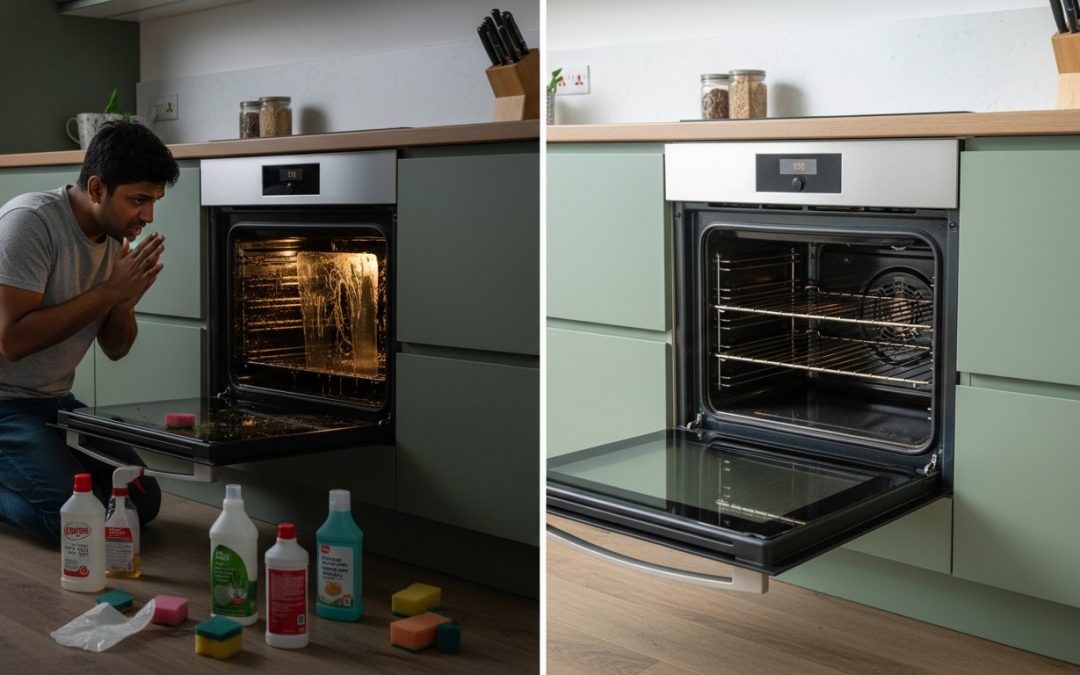
Is that afternoon spent face-down in a cloud of caustic fumes really saving you money, or is it just costing you your weekend? Most homeowners have been there; scrubbing away at baked-on carbon that simply won’t budge while your back aches and the kitchen smells like a chemistry lab. It is a messy, exhausting chore that often leaves the appliance looking only slightly better than when you started. When weighing up professional oven cleaning vs diy, the choice often feels like a simple trade-off between a cheap bottle of supermarket spray and the expertise of a local specialist.
I understand the frustration of seeing smoke every time you turn on the grill despite your best efforts. In this guide, I will show you the real differences in cost, safety, and results to help you decide if you should tackle the grease yourself or hire a London expert. We will explore the 2026 updates to GB CLP hazard standards and how professional tools protect your heating elements from accidental damage. You will discover how to return your kitchen to showroom condition whilst saving your Saturday for the things you actually enjoy.
Key Takeaways
- Learn why professional component immersion is far more effective than a simple surface scrub for removing stubborn carbon crust.
- Discover how cleaning the hidden grease reservoir behind the fan prevents smoke and protects the natural flavour of your cooking.
- Evaluate the true cost of professional oven cleaning vs diy by factoring in the price of supplies, your personal time, and improved energy efficiency.
- Prioritise your family’s health by understanding the risks of harsh chemical fumes and lingering VOCs found in many supermarket sprays.
- Recognise the essential triggers for booking a London specialist, such as preparing for a house move or noticing that first whiff of burnt grease.
The Great Kitchen Debate: Professional Oven Cleaning vs DIY Methods
The debate between professional oven cleaning vs diy is a staple of British household maintenance. Most people view it as a choice between saving a few pounds and saving their sanity. I have seen countless kitchens where the oven is the one appliance that feels completely beyond help. This psychological friction comes from the sheer physical effort required to shift carbon deposits that have been baked on for months. It is not just about the mess; it is about the feeling that no matter how hard you scrub, the results never quite match the effort. It is no wonder this task is consistently voted as the UK’s most dreaded chore.
There is also a dangerous visual trap at play. You might wipe the door glass and the bottom tray until they shine, but the real risks hide where you cannot see. Grease accumulates behind the back panel and around the fan assembly. These hidden reservoirs are often the cause of that familiar kitchen smoke and, in extreme cases, can lead to grease fires. Even a modern self-cleaning or pyrolytic oven requires manual intervention for the racks and glass. Using the wrong abrasive pads on these high-tech coatings can cause permanent, costly damage that a simple wipe-down won’t fix.
What Does ‘Professional’ Actually Mean in 2026?
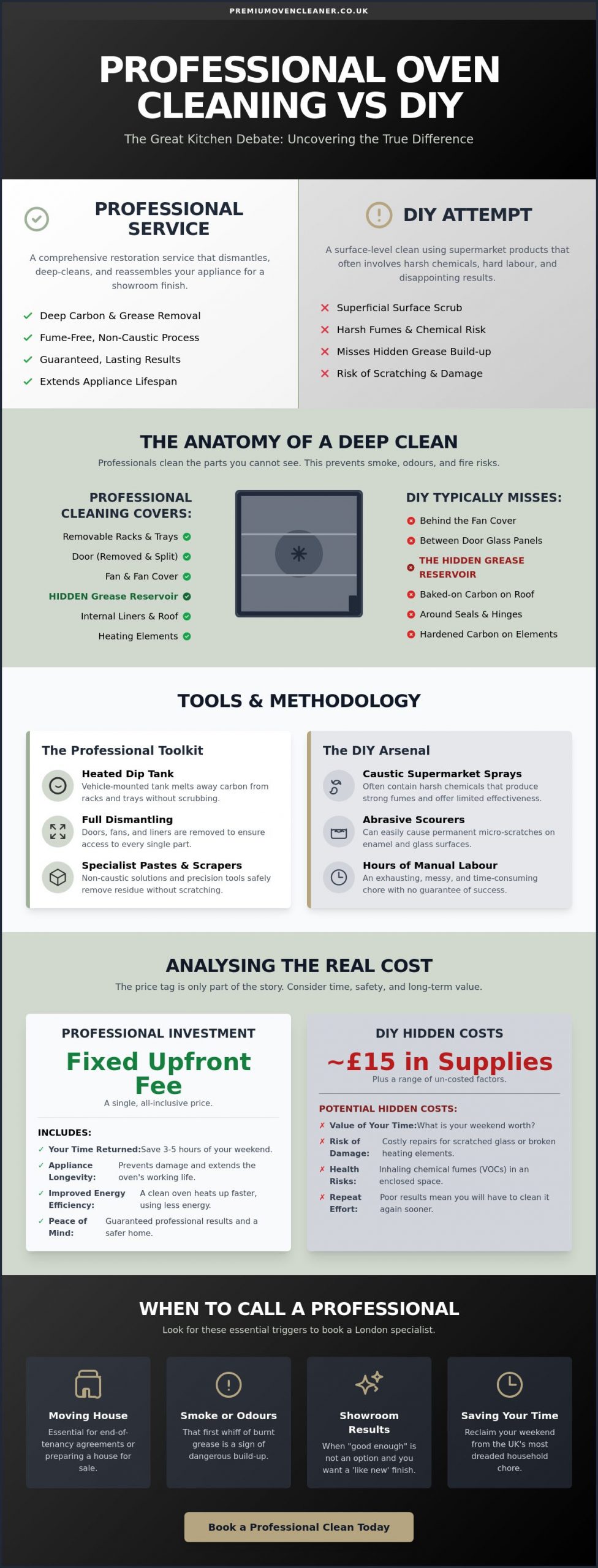
In 2026, the professional standard is defined by restoration rather than just cleaning. When I arrive at a home, I don’t just spray and wipe. I dismantle the appliance. This includes removing the door, the fan, and the internal liners. These components go into a vehicle-mounted dip tank. This specialised heated tank uses solutions to melt away carbon that a supermarket spray wouldn’t touch. It is a methodical, steady process that ensures every nook and cranny is returned to its original condition. My can-do attitude means I am unfazed by years of neglect. I see a challenge where others see a lost cause.
The Limitations of the Saturday Morning Scrub
DIY efforts often rely on supermarket degreasers that are either too weak to work or so caustic they make breathing difficult. You spend hours with a scourer only to find the carbon crust is still there. Most DIYers eventually hit a wall of exhaustion and settle for a result that is merely good enough. However, there is a massive gap between a surface that looks better and one that is truly gleaming. Without the right scrapers and professional-grade solutions, you risk scratching the enamel or damaging the delicate heating elements. When weighing up professional oven cleaning vs diy, it’s clear that the domestic approach often lacks the tools to finish the job properly.
What Supermarket Sprays Miss: The Deep-Clean Advantage
When you look at a dirty oven, you are seeing the result of repeated high-heat chemical reactions. Every time you roast a joint or bake a pie, small fat particles settle on the interior surfaces. Over time, these layers undergo a process of carbonisation, turning into a rock-hard carbon crust. Standard supermarket sprays are often too weak to penetrate this stubborn shell. They might dissolve the surface oils, but the hardened foundation remains. This is where the comparison of professional oven cleaning vs diy becomes a matter of chemistry. Professional solutions are designed to break these bonds without damaging the underlying enamel.
The most neglected area is often behind the fan. This hidden grease reservoir is a primary cause of smoke and off-flavours in your food. As the fan spins, it flings grease into the housing where it bakes onto the heating element. A DIY wipe-down misses this entirely. For owners of premium appliances like AGAs or range cookers, the stakes are even higher. These cast-iron beauties require a non-generic approach to protect their unique finishes and heat-retention properties. I treat these appliances with the specific care they deserve, ensuring their longevity isn’t compromised by improper cleaning techniques.
I often see homeowners struggling with oven door glass. Using abrasive pads can lead to micro-scratches that actually trap more grease in the future. I use specialised scrapers and non-caustic pastes to achieve crystal-clear results safely. It’s about precision rather than brute force. If you are worried about the dangers of harsh chemicals found in off-the-shelf products, a professional service offers a much safer environment for your family and pets.
The Dip Tank Process Explained
My process centres on a vehicle-mounted dip tank. I take your racks, trays, and even the fan cover out to the van. They soak in a heated, bio-degradable solution that strips away years of grime whilst you get on with your day. This keeps the mess out of your kitchen and avoids the black bath scenario often seen in DIY attempts. It is simply impossible to replicate this heat and volume of solution in a domestic sink or bathtub.
Dismantling for Hygiene: Getting into the Nooks
True hygiene means getting into the areas you cannot see. I remove light covers, fan housings, and internal liners to ensure no grease is left behind. One of the most satisfying parts of the job is cleaning between the glass panels of the oven door. Most people don’t realise these panels can be separated safely. Once cleaned and expertly reassembled, the difference is night and day. If you want your kitchen to feel fresh again, you might consider a professional oven clean to handle the heavy lifting for you.
Analysing the Real Cost: Time, Money, and Appliance Longevity
Many homeowners think they are saving a fortune by tackling the grease themselves. However, when you look at the actual numbers, the comparison of professional oven cleaning vs diy looks very different. By the time you have bought heavy-duty gloves, a variety of scrapers, and several cans of supermarket spray, you have already spent a significant amount. If you factor in your own hourly rate for a job that usually takes an amateur five hours, the “cheap” DIY option starts to look like a false economy. I’ve seen many people spend their entire Saturday scrubbing, only to be left with a result that is just “alright” rather than showroom condition.
There is also the matter of your monthly outgoings. London energy bills are a constant worry, and a dirty oven is a massive drain on efficiency. When carbon crust builds up on your heating elements, it acts like a layer of insulation. Your oven has to work much harder and run for longer to reach the correct temperature. This extra stress often leads to the heating elements burning out prematurely. By removing these deposits, I ensure the heat is distributed evenly, which helps your appliance reach temperature faster and stay there with less effort.
Safety is another hidden cost that many overlook. Beyond the physical strain, there are genuine health risks of oven cleaners, including respiratory irritation and chemical burns if the proper precautions aren’t taken. My professional approach removes these risks from your home entirely, giving you back your weekend whilst ensuring your kitchen remains a safe environment for your family.
The DIY Expense Checklist
The true cost of a DIY clean often includes items you didn’t plan for. I frequently meet clients who have tried to save money but ended up needing to replace damaged door seals because caustic sprays have perished the rubber. London’s hard water can also complicate things, leaving limescale deposits on hobs that require specific treatments. Other common expenses include:
- Multiple “failed” cleaning products that didn’t shift the carbon.
- Replacement of scratched glass panels caused by using the wrong abrasive tools.
- The cost of professional-grade PPE that most households don’t keep in the cupboard.
Protecting Your Investment
Whether you have a standard integrated unit or a premium AGA, your oven is one of the most expensive appliances in your home. Appliance Longevity is the direct result of removing acidic grease deposits that would otherwise corrode internal surfaces and stress the electrical components. For those living in rented London flats, a professional clean is often the difference between getting a full deposit back or facing a heavy deduction from a landlord. Investing in a specialist clean once or twice a year is a fraction of the cost of a full appliance replacement; much like how professional maintenance from a firm like Pro Torch Roofing can protect a property’s exterior from long-term damage.
Safety and Health: Why Professional Methods Win Over Harsh Chemicals
Most people don’t realise that the ‘clean’ smell following a DIY scrub is actually a warning sign. Those sharp, stinging fumes are Volatile Organic Compounds (VOCs) that can linger in your kitchen for days. In the comparison of professional oven cleaning vs diy, the health of your household is often the deciding factor. I’ve worked in many compact London flats where opening a window simply isn’t enough to clear the air. Using high-pH caustic sprays in these confined spaces can lead to respiratory irritation and even chemical burns if a glove slips.
Fire safety is another critical area where a specialist makes a difference. Thick layers of grease are highly flammable. When this fat is allowed to build up around the heating elements and behind the fan housing, it creates a genuine fire hazard. By the time you notice a whiff of smoke, the risk is already present. A professional deep clean removes this fuel source entirely. It also ensures your food hygiene remains top-notch. Nobody wants their Sunday roast to carry the faint, chemical aftertaste of a supermarket degreaser.
Eco-Friendly vs. Caustic Solutions
I am committed to using bio-degradable, non-toxic agents that are as effective as they are safe. By August 2026, all cleaning chemicals in the UK must comply with updated GB CLP hazard standards. I use fume-free solutions that mean your kitchen stays habitable throughout the process. You can even use your oven immediately after I leave. This is a far cry from the ‘hazmat’ environment created by domestic caustic kits. These kits are also designated as hazardous waste, and improper disposal can lead to potential fines of up to £600 under current UK regulations.
Protecting the Household
For families with pets, small children, or asthma sufferers, professional cleaning is the only responsible choice. I take great pride in providing a service that doesn’t just look good but feels safe. You won’t have to worry about curious pets licking a caustic residue or children breathing in lingering fumes. It’s about more than just a gleaming finish; it’s about the peace of mind that comes from a certified, hygienic environment. If you want to ensure your kitchen is truly safe, you can book a professional oven clean today and leave the chemicals to the experts.
Making the Choice: When to Hire a Professional Oven Cleaner in London
Deciding between professional oven cleaning vs diy comes down to the current state of your kitchen and how much you value your free time. If your oven is relatively new and you have kept on top of spills, a quick wipe-down might suffice for a few weeks. However, if you’re facing a thick carbon crust or notice smoke every time you preheat, the domestic approach is often a waste of effort. I’ve found that most Londoners reach a point where the physical toll of scrubbing simply isn’t worth the mediocre results achieved with supermarket sprays.
There are specific triggers that make a professional service the logical choice. Moving house is the most common. Whether you are moving into a new place in Watford or leaving a flat in central London, you want the kitchen to be spotless. Preparing for big family events or the Christmas rush is another peak time when you need your appliance to perform at its best. If you notice that first whiff of burnt grease, it is a sign that the hidden reservoirs I mentioned earlier are full. At this stage, professional intervention is about fire safety as much as aesthetics.
Moving house is also the ideal time to address other deep-cleaning needs; you can learn more about how UK Carpet Care Ltd provides professional carpet and upholstery restoration to ensure your home is perfectly presented.
Why do people choose a local specialist like me over a big national franchise? It’s about reliability and a personal touch. I am a neighbour who takes genuine pride in manual craft. I don’t offer the cold, clinical service of a massive corporation. Instead, I bring a “can-do” attitude to every task, whether it’s a standard single oven or a complex range cooker. I’m completely unfazed by long-neglected appliances because I have the tools and experience to restore them to their original condition. When you book a clean, you can expect a punctual, tidy, and thorough service that leaves your kitchen ready to use immediately.
The ‘End of Tenancy’ Special
Landlords and letting agents in London and Watford are notoriously strict about appliance hygiene during check-outs. In fact, a greasy oven is one of the most frequent reasons for deposit disputes. I ensure your kitchen meets the highest professional standards, helping you secure your check-out with confidence. You can find more details on this in my End of Tenancy Oven Cleaning London support article. It is a small investment that often saves hundreds of pounds in potential deductions.
Restore to New with Premium Oven Cleaner
My expertise isn’t limited to just the main oven. I provide comprehensive cleaning for hobs, microwaves, and barbecues across Greater London. I treat every appliance with the same meticulous care, using non-toxic solutions that protect your home environment and your family’s health. Choosing a local expert means you get punctuality, honesty, and a hard-working service that prioritises your satisfaction. When comparing professional oven cleaning vs diy, the peace of mind of a guaranteed, showroom-condition result is hard to beat. Book your professional oven restoration today.
Enjoy a Showroom-Condition Kitchen Without the Effort
Choosing between professional oven cleaning vs diy often comes down to one simple question: how much is your free time worth? As we have explored, the professional approach isn’t just about a surface wipe; it is a methodical restoration that protects your appliance’s lifespan and your family’s health. By opting for a specialist service, you avoid the risks of caustic chemicals and ensure that hidden grease reservoirs behind the fan are completely removed. This leads to better-tasting food, a smoke-free kitchen, and improved energy efficiency for your London home.
I take pride in offering a personal, reliable service across London, Watford, and the surrounding areas. I use eco-friendly, fume-free solutions and am certified to clean all major brands, ensuring your oven is treated with the care it deserves. Don’t spend another Saturday face-down in grease. Get your instant quote for professional oven cleaning in London and let me handle the hard work for you. I look forward to helping you get that fresh start in your kitchen.
Frequently Asked Questions
Is professional oven cleaning worth the money compared to DIY?
Professional oven cleaning is worth the investment because it provides a deep restoration that DIY methods simply cannot match. When you evaluate professional oven cleaning vs diy, you must factor in the cost of specialised tools, cleaning agents, and your own time. A specialist removes the carbon crust that causes smoke and energy inefficiency, which helps lower your London utility bills in the long run.
How long does a professional oven clean take compared to doing it myself?
A professional clean typically takes between one and two hours for a standard oven, whereas a thorough DIY job can easily consume a whole Saturday. Range cookers and AGAs take slightly longer, usually around two to three hours. I work methodically to ensure a deep clean in a fraction of the time it would take an amateur using supermarket sprays.
Can I use my oven immediately after a professional clean?
You can use your oven as soon as I have finished the job. Because I use non-caustic, fume-free solutions, there is no need to wait for chemical smells to dissipate or to perform a “burn-off” cycle. Your kitchen will be ready for cooking immediately, which is a major advantage for busy households.
Are the chemicals used by professional oven cleaners safe for pets and children?
Yes, the solutions I use are completely safe for pets, children, and people with respiratory conditions like asthma. I prioritise bio-degradable and non-toxic agents that don’t leave behind harmful Volatile Organic Compounds (VOCs). This ensures your home remains a healthy environment whilst still achieving a showroom-condition finish.
Do I need to clean the oven before the professional arrives?
There is no need to clean anything before I arrive. I am completely unfazed by grease or long-neglected appliances, so don’t feel the need to “pre-scrub.” All I ask is that you clear the area directly in front of the oven so I have enough space to work comfortably and set up my equipment.
What happens if a DIY oven cleaner damages my heating element?
Damaging a heating element with DIY chemicals or abrasive pads can lead to expensive repair bills or even a complete appliance replacement. Caustic supermarket sprays can perish seals and corrode delicate electrical components if not rinsed perfectly. Hiring a specialist removes this risk, as I have the experience and tools to dismantle and clean your oven safely.
How often should I have my oven professionally cleaned in a busy London household?
Most busy London households benefit from a professional clean every six months, though once a year is sufficient for lighter use. Regular maintenance prevents the build-up of acidic grease that can corrode the interior and helps maintain the professional oven cleaning vs diy advantage by ensuring your appliance stays in peak condition.
Can professional cleaners handle AGAs and range cookers?
I specialise in cleaning all major brands, including heavy-duty appliances like AGAs and range cookers. These premium cookers require a specific, non-generic approach to protect their cast-iron components and enamel finishes. I use vehicle-mounted dip tanks to clean the racks and trays, ensuring these large appliances are restored without making a mess in your kitchen.