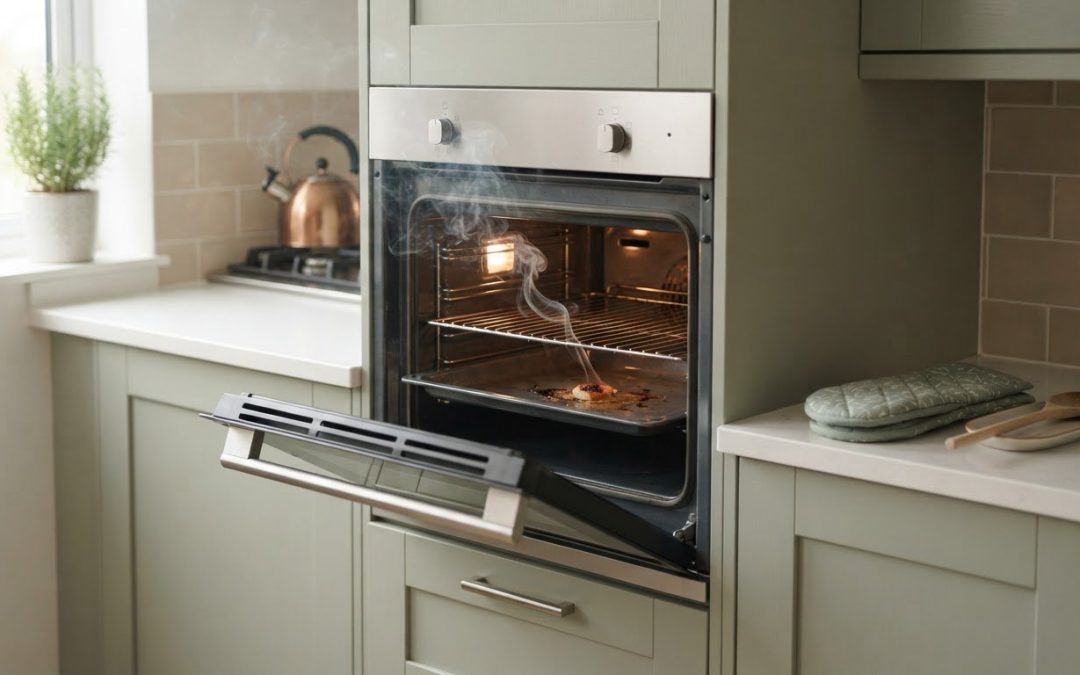
What if smoke from your oven is a clue, not a diagnosis? If you’re searching for oven smoke when cooking causes, it’s understandable to worry about burnt food, grease or an appliance fault, especially with dinner in progress. Don’t guess or inspect hot parts. Note when the smoke starts and stop cooking if it seems heavy or persistent.
This guide covers common causes, from food residue and leftover cleaning product to a possible faulty component, and explains how to narrow them down safely. You’ll learn when to switch the oven off if it’s safe to do so and seek qualified appliance advice, and when built-up food or grease may call for a thorough professional clean. That can help you choose a sensible next step before cooking again.
Key Takeaways
- Smoke can have several causes, so it doesn’t prove there’s an appliance fault on its own.
- Common oven smoke when cooking causes include food spills and grease on hot surfaces.
- If smoke appears, pause cooking and assess the situation from a safe distance. Don’t reach into a hot oven or touch its components.
- A professional oven clean may help remove built-up food or grease residue, but it can’t diagnose or repair a faulty component.
Why does an oven smoke when cooking? Common causes explained
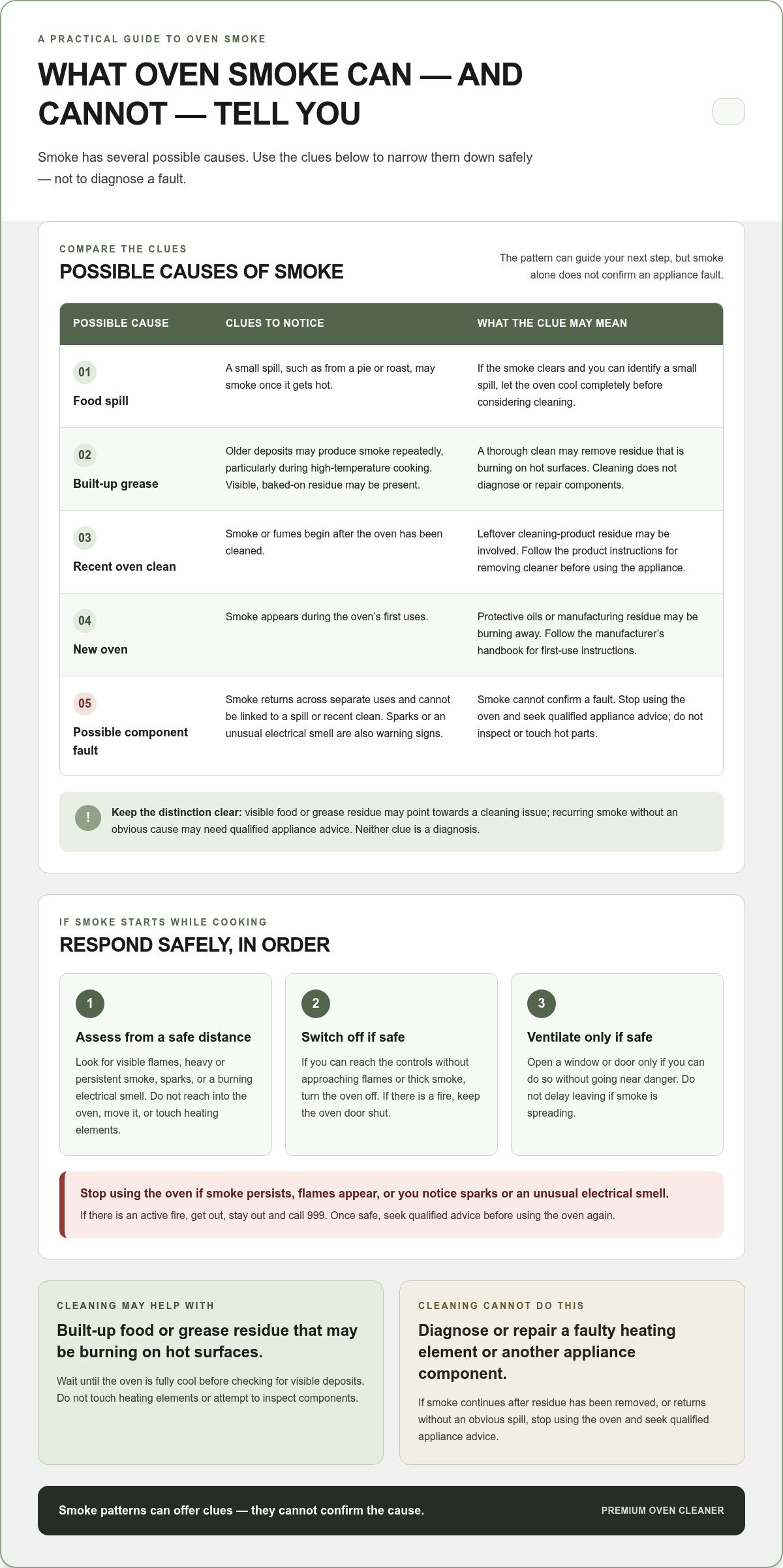
Smoke can have several causes, and by itself it doesn’t identify a fault. A common cause is food or grease residue heating on the oven’s interior surfaces or near a heating element. A small spill from a pie or roast can smoke once it gets hot. Older grease deposits may produce smoke repeatedly, particularly during high-temperature cooking. An Oven uses heat to cook food, so residue on surfaces exposed to that heat can burn and give off smoke.
Other clues matter. A new oven may smoke during its first uses as protective oils or manufacturing residue burn away. Follow the manufacturer’s handbook for first-use instructions. If you’ve recently cleaned the oven, leftover cleaning-product residue could create smoke or fumes when heated. Follow the product instructions for removing cleaner before using the appliance, and don’t assume the smoke is burnt food.
A faulty heating element or another appliance component is also possible, but smoke alone can’t confirm it. Don’t inspect or touch hot parts. If the smoke keeps returning and you can’t link it to a spill or recent clean, stop using the oven and seek qualified appliance advice; established service providers such as HeyKey Appliance & HVAC Repair illustrate how professionals safely diagnose and address complex appliance issues.
What clues help distinguish burnt food, grease and an appliance fault?
Think about what happened before the smoke started. Was there a recent spill, a build-up of grease or a recent oven clean? Note whether smoke appears during one cooking session or returns across separate uses. These patterns can help narrow down likely causes, but they aren’t a diagnosis. Smoke may come from burning food or grease, cleaner residue, first-use burn-off or a faulty component.
What to do if your oven smokes during cooking
Pause cooking first. A brief wisp after a spill may have a different cause from smoke that keeps building, but don’t put yourself at risk to investigate. Follow these steps:
- Assess from a safe distance. Look for visible flames, heavy or persistent smoke, and unusual signs such as sparks or a burning electrical smell. Don’t reach into the oven, move it or touch its heating elements.
- Switch it off if safe. If you can operate the controls without approaching flames or thick smoke, turn the oven off. If there’s a fire, keep the oven door shut.
- Ventilate only if it’s safe. Open a window or door if you can do so without going near danger. Don’t delay leaving if smoke is spreading.
If the smoke quickly clears and you can identify a small food spill, let the oven cool completely before considering any cleaning. If smoke returns during separate cooking sessions, don’t keep testing the appliance. Recurring smoke may point to a fault that needs qualified appliance advice. These clues can help you assess oven smoke when cooking causes, but they can’t confirm a component failure.
When should you stop using the oven and seek help?
Stop using the oven if smoke persists, flames appear, or you notice sparks or an unusual electrical smell. Don’t use oven cleaning as a response to signs of an appliance fault. If there’s an active fire, get out, stay out and call 999. Once the situation is safe, seek qualified advice before using the oven again.
If there’s no sign of a fault and built-up food or grease seems the likely source, a professional oven clean may help remove residue. Cleaning addresses deposits, not faulty components.
Could a professional oven clean help with smoke caused by residue?
A professional clean may help if food or grease has built up on the oven’s interior surfaces and is burning as the appliance heats. Once the oven is cool, look for visible, baked-on deposits, particularly around areas where spills may have settled. Removing residue can address a potential source of smoke, though it won’t stop smoke caused by something else. In commercial settings and office kitchens where appliances see frequent use, regular upkeep from services such as Super Clean 360 can help prevent stubborn grease and grime from accumulating in the first place.
Cleaning has clear limits. A professional clean cannot diagnose or repair a faulty heating element or another appliance component. If smoke continues after residue has been removed, or returns without an obvious spill, stop using the oven and seek qualified appliance advice rather than treating cleaning as the fix.
When is oven cleaning a sensible next step?
A thorough clean is worth considering when visible baked-on food or grease may be smoking during cooking. Wait until the oven is fully cool before checking for residue, and don’t touch heating elements or attempt to inspect components. Premium Oven Cleaner provides certified oven cleaning for residential and commercial customers in Greater London and surrounding areas, using a thorough process focused on cleaning, not repair.
The pattern of smoke and visible deposits can help guide your next step, but they can’t rule out an appliance fault. If smoke persists after cleaning, seek qualified appliance advice before using the oven again. If accumulated grime seems the likely issue, read more about professional oven cleaning.
Take the next step towards a cleaner oven
Once you’ve considered the likely oven smoke when cooking causes, choose your next step based on what you can safely see. If baked-on food or grease remains and appears to be contributing, a thorough clean may help remove it. It won’t address an appliance fault, so persistent smoke still calls for qualified appliance advice.
Premium Oven Cleaner provides a thorough, certified oven cleaning process for residential and commercial customers in Greater London and surrounding areas, including Ruislip, Pinner, Harrow, Watford, Uxbridge, Teddington, Twickenham, Raynes Park, Sheen, Richmond, Ham and Kingston. If residue seems the likely issue, arrange a certified oven clean with Premium Oven Cleaner. Take it one safe step at a time, and move towards a cleaner oven with greater confidence.
Frequently Asked Questions
Why does my oven smoke when cooking?
Common oven smoke when cooking causes include food or grease on hot surfaces, baked-on deposits and cleaner residue. A new oven can also smoke during initial use, and a component fault is another possibility. Think back to recent spills or cleaning, and note whether smoke appears with a particular setting, such as the grill. That pattern is useful context, not proof of a fault.
Is it normal for an oven to smoke when cooking?
Not always. A brief wisp linked to a small spill or an oven’s first use may have a straightforward explanation, but repeated or heavy smoke needs attention. Stop cooking if you’re uneasy and switch the oven off if it’s safe. If flames or immediate danger arise, leave the property, stay out and call 999. Don’t use the oven again until recurring smoke has been assessed.
Can built-up grease make an oven smoke?
Yes. Grease and food deposits can burn as the oven heats. If visible residue remains once the appliance is cool, cleaning may be a sensible next step. Never try to remove deposits from a hot oven. Households in Ruislip, Pinner, Harrow, Watford, Uxbridge, Teddington, Twickenham, Raynes Park, Sheen, Richmond, Ham and Kingston can arrange professional oven cleaning with Premium Oven Cleaner. If smoke continues afterwards, seek qualified appliance advice.
What should I do if my oven starts smoking during cooking?
Pause cooking and assess the situation from a safe distance. If you can do so safely, switch off the oven; don’t touch hot surfaces or reach inside. If flames appear, keep the oven door shut, leave the property, stay out and call 999. Ventilate only if it’s safe to do so. Once the situation is under control, note when the smoke began and share that information with a qualified appliance professional if it recurs.