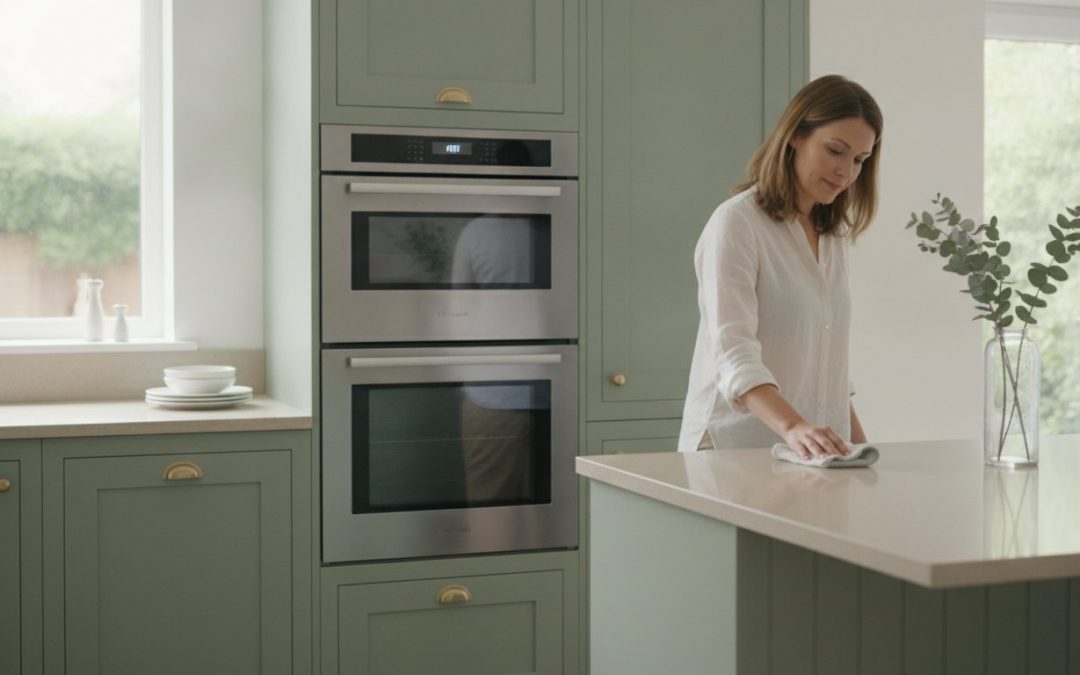
The best professional oven clean is actually a partnership between my technical skill and your five-minute preparation. I’ve found that homeowners often worry about how to prepare for a professional oven clean, fretting over kitchen clutter or where I’ll park the van. It’s natural to feel a touch of “cleaner’s guilt” if your cooker hasn’t been scrubbed in years, but I’ve seen every level of burnt-on grease and I’m completely unfazed. I’m here to help, not to judge, and a little bit of forward planning goes a long way.
I want your appointment to be as efficient and stress-free as possible. In this guide, I’ll share my essential 2026 checklist to help you get your kitchen ready for a specialist visit. I’ll walk you through simple steps for clearing the workspace and managing pets or children. This ensures you get a sparkling oven and a fast service with absolutely no disruption to your home.
Key Takeaways
- Learn why securing a local parking space and clearing a path to your kitchen is essential for a prompt and efficient start to the job.
- Discover exactly how to prepare for a professional oven clean by emptying your appliance and ensuring it’s cool enough for a deep scrub.
- Understand the best ways to keep your pets and children safe whilst I work with specialist tools and hot water in your home.
- Get my professional tips on verifying smoke alarms and preparing your kitchen area for a seamless, mess-free experience.
Practical Kitchen and Access Logistics
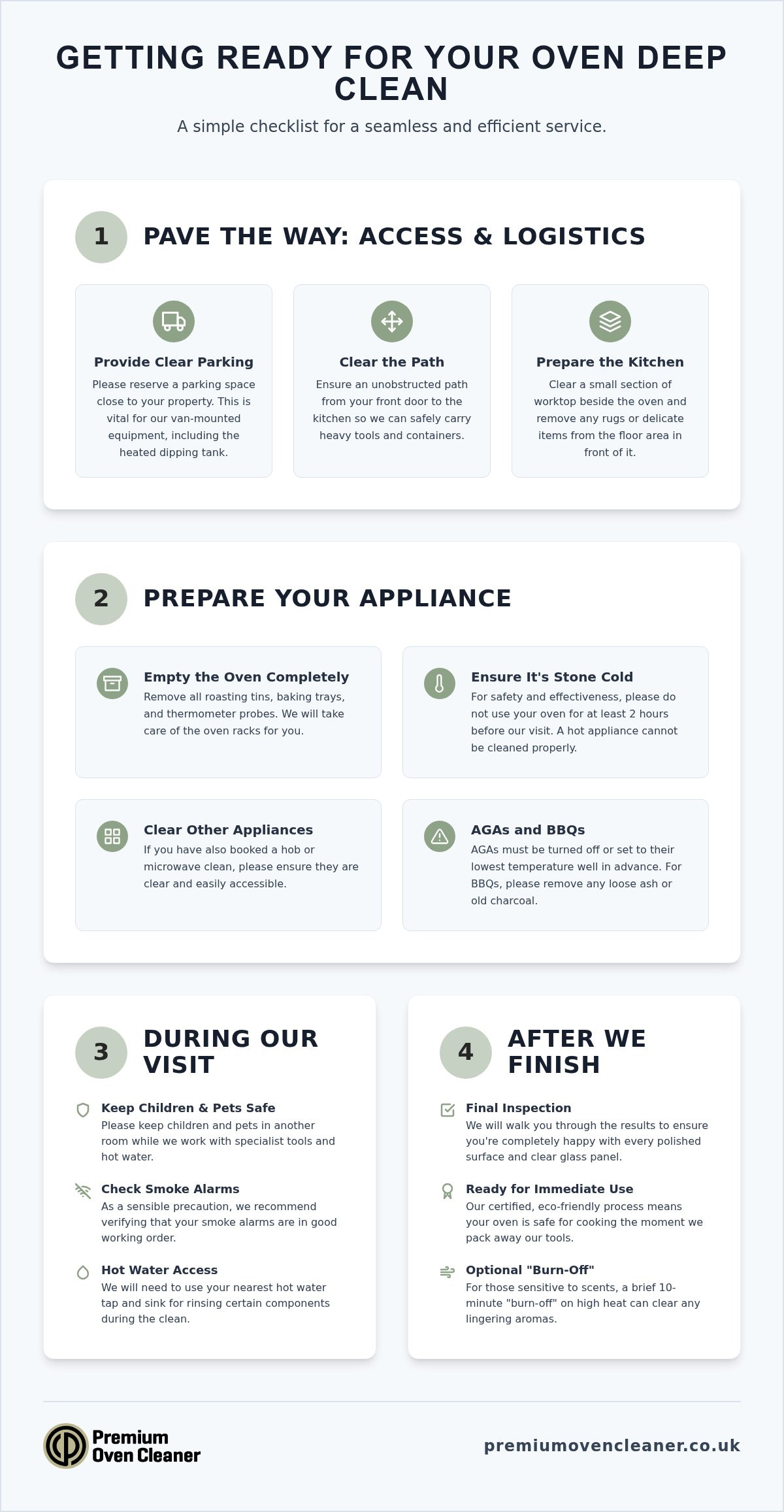
Understanding how to prepare for a professional oven clean starts with the basics of home access. I’ll arrive with a van full of specialist equipment, so having a clear parking space as close to your front door as possible is the first step. This isn’t just for my convenience; my van houses a large, heated dipping tank used to soak your racks and trays whilst I work on the main unit inside. If I have to park two streets away, the process takes much longer and the water loses its vital heat.
Parking and Van Access in Greater London
If you live in areas with strict parking controls, such as Richmond or Kingston, please have a visitor permit ready or a space reserved. I’m a local specialist, so I’m familiar with the narrow streets and permit zones, but a little help goes a long way. Once I’m parked, I’ll need a clear, unobstructed path from your front door to the kitchen. I’ll be carrying heavy toolboxes and containers, so moving any hallway furniture or loose rugs prevents trips and ensures I can get straight to work.
Inside the kitchen, I’ll need a bit of your help to set up the workspace effectively:
- Clear the floor: Please remove any kitchen rugs or delicate items from the area immediately surrounding the oven.
- Water access: I’ll need to use your nearest hot water tap and sink for rinsing certain components.
- Surface space: Clearing a small section of the worktop next to the cooker allows me to organise my tools without cluttering your kitchen.
Even if you’ve recently used self-cleaning oven functions, my professional service goes much deeper, reaching the hidden fans and glass panels that home cycles often miss. Knowing how to prepare for a professional oven clean ensures I can focus entirely on the restoration of your appliance without any logistical delays.
Preparing Your Appliances for the Deep Clean
Once you’ve sorted the logistics, the focus shifts to the appliance itself. To understand how to prepare for a professional oven clean, you should start by completely emptying the unit. This means removing all roasting tins, baking trays, and thermometer probes. I’ll take care of the racks, but having the interior clear allows me to start the deep clean immediately. It’s also vital that the oven is stone cold. Please don’t use it for at least two hours before my visit. Working on a hot appliance is dangerous and can actually interfere with the effectiveness of specialist oven cleaning techniques that I use to restore the surfaces to their original condition.
Clearing the worktops on either side of the cooker is equally important when learning how to prepare for a professional oven clean. I’ll need a staging area to lay out dismantled parts like doors and seals whilst I scrub the main cavity. If you’ve booked a hob or microwave cleaning alongside your oven, please ensure these are also cleared out and easily accessible. A clear workspace means I can work faster and more efficiently, ensuring your kitchen returns to normal as quickly as possible.
Special Considerations for AGAs and BBQs
AGA owners need to take extra care. These cast-iron beauties retain heat for a long time; they must be turned off or set to their lowest possible temperature well before I arrive. For those in Watford or Uxbridge booking a BBQ clean, please make sure the grill isn’t blocked by heavy garden furniture or covers. Whilst I’m happy to handle all the heavy degreasing and carbon removal, tipping out any loose ash or old charcoal beforehand helps me get straight to the detail work. I’m completely unfazed by even the grimiest grills, but a clear path to the appliance makes the job much smoother.
Safety, Pets, and Post-Clean Readiness
The final part of learning how to prepare for a professional oven clean involves managing the kitchen environment whilst I work. My process is thorough and involves sharp scrapers, specialist tools, and very hot water. For these reasons, it’s essential to keep pets and small children in another room until I’ve finished. I want to ensure everyone stays safe whilst I focus on restoring your appliance to its former glory. It’s a busy process; having a clear, quiet workspace helps me maintain the high standards you expect.
I also recommend verifying that your smoke alarms are in good working order before I arrive. Whilst my professional, non-caustic cleaning process rarely triggers them, it’s a sensible safety precaution for any household maintenance. Once the job is nearing completion, please prepare to spend about five minutes with me for a final inspection. I take great pride in my manual craft. I want to walk you through the results to ensure you’re completely happy with every polished surface and clear glass panel.
Aftercare and Immediate Use
My certified cleaning process uses eco-friendly products, which means your oven is ready for cooking the moment I pack away my tools. If you’re particularly sensitive to the scent of new cleaning materials, you might choose to run the oven on a high heat for a brief 10-minute “burn-off” period before your first meal. This isn’t strictly necessary, but it can help clear the air if you prefer a completely neutral environment. Understanding how to prepare for a professional oven clean ensures that from the moment I leave, your kitchen is back in action with a sparkling, high-performance cooker.
Enjoy a Fresh Start in Your Kitchen
A little bit of preparation goes a long way in ensuring your specialist appointment is as smooth and efficient as possible. By clearing a parking space, emptying your appliance, and keeping your pets safe, you’ve done the hard work of setting the stage. I’ve shared these tips on how to prepare for a professional oven clean because I want you to feel completely confident when I arrive. Whether you’re in Teddington, Twickenham, or anywhere across North West and South West London, I’m here to provide a reliable, unpretentious service that restores your cooker to its original condition.
I take genuine pride in my craft and specialise in hobs, microwaves, and high-end AGAs. If you’re ready for a kitchen that looks and smells like new, book your professional oven clean in London and the Home Counties today. I’ll handle the grease and grime whilst you enjoy the results of a truly deep clean. I look forward to helping you reclaim your kitchen.
Frequently Asked Questions
How long does a professional oven clean usually take?
A standard single oven clean usually takes between 1.5 and 2 hours to complete. If you have a larger double oven or a four-oven AGA, the process can take up to 4 hours. The exact time depends on the level of carbon build-up and the specific appliance type. I work methodically to ensure every corner is restored to its original condition without rushing.
Do I need to turn my AGA off before you arrive?
Yes, your AGA must be turned off or set to its lowest possible temperature at least 24 hours before I arrive. These cast-iron appliances retain heat for a long time. Working on a hot AGA is dangerous and causes my cleaning solutions to evaporate too quickly. This is a vital part of how to prepare for a professional oven clean to ensure a thorough result.
Is it safe for my pets to be in the house during the cleaning?
It is perfectly safe for your pets to be in the house, but I ask that you keep them out of the kitchen whilst I am working. I use sharp scrapers and containers of very hot water, which can pose a risk to curious paws. Keeping the workspace clear allows me to focus on the deep clean whilst ensuring your pets stay safe and happy.
Will there be a strong smell of chemicals in my kitchen afterwards?
You won’t have to deal with any harsh chemical smells in your home. I use non-caustic and eco-friendly products that are tough on grease but gentle on your environment. There are no unpleasant fumes, so your kitchen will simply feel fresh and clean. This is one reason why knowing how to prepare for a professional oven clean with a specialist is better than using DIY kits.
Do you need to use my kitchen sink for the cleaning process?
I will need to use your kitchen sink and hot water tap for part of the process. Whilst the heavy lifting happens in the heated dipping tank in my van, I use your sink to rinse smaller components and wipe down surfaces. I always take great care to protect your draining board and will leave the area exactly as I found it.