Could the very appliance you use to cook your family’s dinner be the biggest health risk in your kitchen? While we all spend time scrubbing worktops and bleaching sinks, it is easy to overlook the importance of oven cleaning for food safety. The CDC estimates that 48 million people experience foodborne illness every year; a staggering figure that highlights why hygiene in the heart of the home is so vital. I understand the hesitation many feel when facing a greasy oven. It is a tough, messy job, and the worry about chemical residues from DIY cleaners often makes people put it off even longer.
I believe that a kitchen isn’t truly clean until the oven is restored to a professional standard. This guide will show you how proper hygiene prevents cross-contamination and ensures your meals are prepared in a completely sanitary environment. You’ll discover how to achieve a scientifically clean oven and eliminate carbonised smells that can ruin the taste of your favourite dishes. I will also explain the risks of bacteria growth in old grease, giving you total peace of mind that your appliance is safe, efficient, and ready for your next family meal.
Key Takeaways
- Understand how leftover fats and sugars act as a breeding ground for bacteria whilst your cooker is cold.
- Learn why prioritising regular oven cleaning for food safety is the most effective way to prevent cross-contamination amongst your kitchen appliances.
- Establish a straightforward maintenance routine to stop grease accumulation and neutralise germs trapped in oven seals.
- Identify the “invisible” hazards lurking behind fan plates and door glass that standard surface wipes cannot reach.
- Restore your appliance to a professional standard to ensure every meal is prepared in a truly hygienic and smoke-free environment.
The Hidden Risks: Why Oven Cleaning is Essential for Food Safety
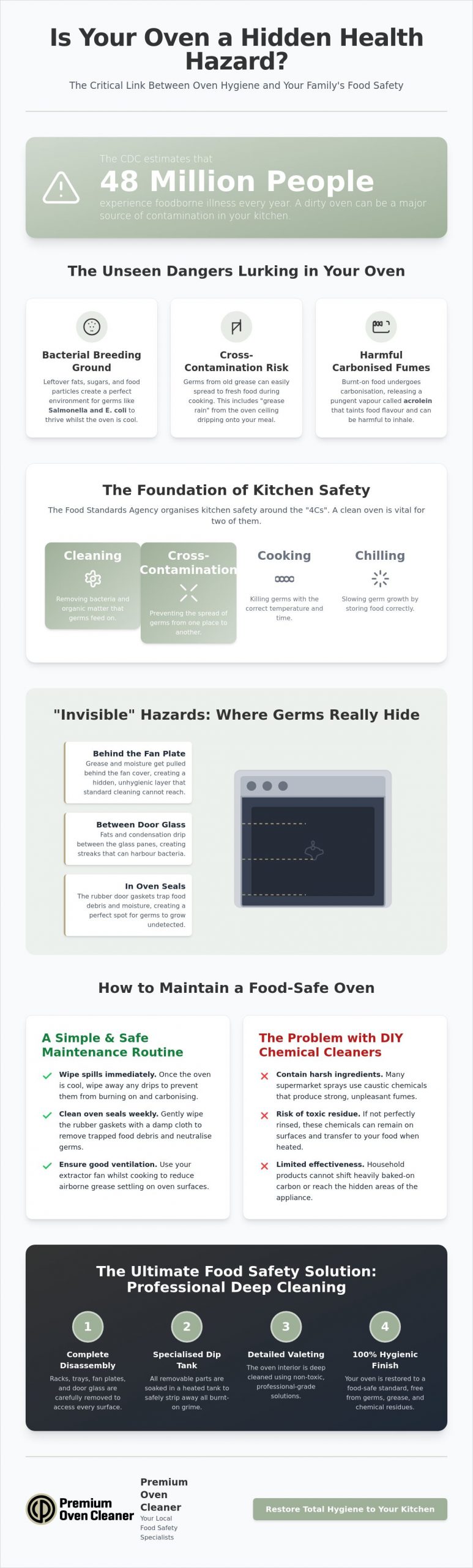
Many homeowners view a dirty oven as a cosmetic issue or a source of bad smells, but it’s actually a primary site for cross-contamination amongst kitchen appliances. When fats and sugars splash onto the interior surfaces, they create a perfect breeding ground for bacteria whilst the oven is cool. I see this often in my work; a layer of grease that looks harmless but acts as a reservoir for germs that can easily spread to your hands or utensils.
The Food Standards Agency organises kitchen safety around the “4Cs”: Cleaning, Cooking, Chilling, and Cross-contamination. Professional oven cleaning for food safety sits right at the heart of this framework. By removing the organic matter that bacteria feed on, you break the cycle of contamination in your kitchen.
Food-safe oven cleaning is the removal of all carbonised matter and grease.
Bacteria and Biofilms in the Kitchen
Neglected corners of an oven often trap moisture and food particles. These conditions support the growth of harmful pathogens like Salmonella and E. coli. I’ve encountered many ovens where “grease rain” is a genuine concern. This occurs when old fat on the oven roof liquefies during cooking and drips directly onto your fresh meal. It’s a hidden risk that many people don’t consider until they see the state of the oven ceiling during a deep clean.
Carbonisation and Chemical Fumes
Burnt-on grease doesn’t just smell bad; it undergoes a chemical change called carbonisation. This process produces acrolein, a pungent and potentially harmful vapour that can taint the flavour and safety of your food. You might think the “self-cleaning” button is the answer, but understanding how self-cleaning ovens work reveals their limits. These high-heat cycles often fail to reach the hidden areas behind the fan plate or inside the door glass where true hygiene is required.
How to Organise a Food-Safe Oven Maintenance Routine
Maintaining a hygienic cooker doesn’t have to be a struggle. A steady routine helps you stay on top of grease before it becomes a hazard. By establishing a consistent habit, you ensure that oven cleaning for food safety becomes a natural part of your week. I recommend a simple step-by-step approach to keep your appliance in top shape. Weekly attention to the oven seals is vital; these rubber gaskets often hide food debris and moisture, creating a perfect spot for bacteria to grow undetected. Giving them a gentle wipe prevents these hidden risks from compromising your kitchen hygiene.
Daily Habits for a Hygienic Cooker
Managing spills as soon as they happen is the easiest way to prevent carbonisation. If you see a drip, wait for the oven to cool and wipe it away immediately. I also suggest using your extractor fan or opening a window whilst cooking. Good ventilation reduces the amount of airborne grease that settles on your oven walls, making your weekly clean much faster. These small actions are the foundation of effective oven cleaning for food safety, ensuring your cooking environment remains fresh and sanitary.
The Problem with DIY Chemical Cleaners
Many favourite supermarket sprays contain harsh, caustic ingredients. If you don’t rinse these perfectly, they can leave toxic residues that transfer to your food. Understanding the dangers of oven cleaning chemicals is important for any homeowner. I prefer using non-toxic, professional-grade solutions that provide a food-safe finish without the nasty fumes. There eventually comes a tipping point where household products simply can’t shift the baked-on carbon. When the glass stays brown or the oven begins to smoke, a professional oven cleaning service is the most reliable way to restore total hygiene to your kitchen.
Professional Deep Cleaning: The Ultimate Food Safety Solution
I’ve seen many homeowners struggle with stubborn grease that just won’t budge despite their best efforts. While a surface wipe helps, a professional valeting service is the only way to ensure a truly “food-safe” result. I focus on removing the “invisible” hazards that DIY methods usually miss. This includes stripping back the fan plate to remove hidden grease and cleaning between the layers of door glass where bacteria can linger. Local residents in Watford, Uxbridge, and Richmond often call me because they want the peace of mind that comes from a fully de-carbonised appliance. There’s a real sense of relief when you know your cooker is back to its original, hygienic condition. This standard of care is also vital when moving house; for those in Australia, Tidy Masters offers professional cleaning to ensure kitchens are perfectly sanitised for new occupants.
Our Professional Hygiene Process
I use a specialised “dip tank” method for every job. I remove all the racks, trays, and liners, soaking them in a non-toxic solution in my van. This ensures a much more thorough clean than any scrub-in-place method could ever achieve. My process includes:
- Removing and deep cleaning the fan and fan housing.
- Stripping the oven door to clean between the glass panels.
- Cleaning hobs and microwaves to complete the hygiene circle.
It’s about more than just looks; it’s about making sure your entire cooking area is free from old fats and harmful residues. This level of oven cleaning for food safety is what sets a professional service apart from a quick domestic wipe-down. I take the time to identify potential issues beyond the immediate task, ensuring your appliance is safe and efficient for your next family meal. Just as a clean oven is vital for food safety, maintaining hygienic carpets is essential for a healthy home environment; you can learn more about Commercial Carpet Cleaners Stockport for professional floor and upholstery care.
Serving the Local Community
I take great pride in supporting homeowners across Teddington, Twickenham, and Kingston with scheduled hygiene maintenance. Being a local specialist means I’m just around the corner when you need a hand with a difficult or long-neglected task. I’m completely unfazed by heavy carbon build-up and enjoy the challenge of a total restoration. If you’re looking for more details on how I work, you can read my Professional Oven Cleaning London: The Ultimate Guide for a full breakdown of the service. I believe in being a helpful advisor to my neighbours, providing a reliable service that keeps your kitchen smelling fresh and your family safe.
Secure Your Kitchen’s Hygiene Today
Maintaining a truly sanitary kitchen is about more than just sparkling worktops. I’ve shown how hidden bacteria and carbonised grease can compromise your family’s health if left unchecked. By establishing a simple daily routine and understanding when to call in a specialist, you can ensure your appliance remains a safe place to prepare food. I take great pride in helping my neighbours restore their cookers to a professional standard. I remove the burnt-on residues that standard household cleaners simply can’t touch.
If you’re ready to eliminate the smoke and worry from your kitchen, I’m here to help. I provide certified professional cleaning across Watford, Richmond, and Greater London. My non-toxic, food-safe cleaning process ensures your home stays protected throughout the service. You don’t have to face the grease alone. Book your professional food-safe oven clean today and enjoy the peace of mind that comes with a scientifically clean appliance. Prioritising oven cleaning for food safety is the final step in protecting your home. I look forward to helping you achieve a fresh start in your kitchen.
Frequently Asked Questions
Can a dirty oven cause food poisoning?
Yes, a dirty oven can lead to food poisoning through indirect cross-contamination. Whilst the high heat of a running oven kills many germs, the organic residues left behind when it is cool allow bacteria like E. coli to thrive. These pathogens can easily transfer to your hands or clean work surfaces during the cooking process. I believe that regular oven cleaning for food safety is essential to break this cycle and keep your kitchen truly sanitary.
Is it safe to cook in an oven that smokes?
No, it is not safe to cook in a smoking oven as the fumes can be toxic and affect the quality of your food. Smoke is a clear sign that old grease and food spills are carbonising, which releases acrolein into your kitchen. This pungent vapour can taint the taste of your meals and pose a respiratory irritation. I recommend a thorough cleaning to remove all carbonised matter before you use the appliance again.
What is the most hygienic way to clean oven racks?
I find that a professional dip tank soak is the most hygienic method for cleaning oven racks. Scrubbing in a domestic sink is often difficult and usually fails to remove the deep-seated carbon in the corners and joints. By removing the racks and soaking them in a specialised, non-toxic solution, I can ensure every part is completely de-carbonised. This process leaves the metal perfectly clean and safe for direct contact with your food.
How often should I clean my oven to meet food safety standards?
I suggest a professional deep clean at least once or twice a year to meet high hygiene standards. However, if you roast meat frequently or cook for a large family, you might need a visit more often to prevent grease from building up. Combining this with daily spill management ensures that your appliance stays in a food-safe condition. I am always happy to advise on the best schedule based on your specific cooking habits and how you use your kitchen.